Leave Your Message

7 Tips for Choosing 51.2 V 160 Ah Li Ion Batteries

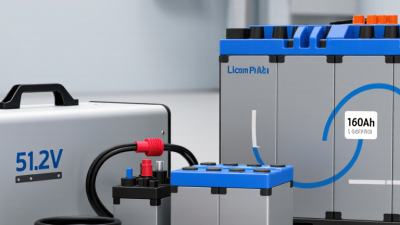
Choosing 51.2 V 160ah Li Ion Batteries starts with more than matching a voltage label. At 160 Ah, a 51.2-volt battery has about 8.2 kWh of nominal energy. Usable energy can be lower. Chemistry, battery-management settings, temperature, and inverter limits all matter. A battery that looks right on a product page may still be a poor fit.

Battery researcher Dr. Shirley Meng’s work highlights the importance of evaluating performance and safety together. A concise paraphrase of that principle is: “Judge a battery by the complete system, not capacity alone.” This is a paraphrase, not a verbatim quotation. The guide’s seven tips examine the details buyers can verify: cell chemistry, continuous discharge current, compatible charge voltage, BMS protections, cycle-life test conditions, physical dimensions, and warranty support. Check the inverter manual and battery datasheet side by side. Look for clear limits, not just peak figures. Ask how cycle life was measured. Real use is messier.

A sunny afternoon, a shaded utility room, and a high-power appliance can produce very different battery demands. Confirm whether the battery supports parallel expansion and whether its communications work with your inverter. Compare warranty terms in writing. One detail is easy to miss: a longer cycle-life claim does not guarantee longer service in every installation. These checks help narrow the options without treating a headline specification as proof of quality.

7 Tips for Choosing 51.2 V 160 Ah Li Ion Batteries

Verify Chemistry and Calculate 51.2 V × 160 Ah = 8.19 kWh

A 51.2 V, 160 Ah battery has a nominal energy rating of 8,192 Wh, or 8.19 kWh. The arithmetic is simple; the chemistry needs checking. A 51.2 V label often describes a 16-cell-series lithium iron phosphate pack, using 3.2 V nominal cells. But “Li-ion” covers several chemistries, so confirm the datasheet names the cell chemistry and specifies nominal voltage.

The International Energy Agency reported that LFP batteries reached about 40% of global electric-car battery demand in 2023, showing how widely this chemistry is used. That market figure does not prove a particular battery’s quality.

Treat 8.19 kWh as nominal, not guaranteed usable energy. The battery management system may reserve capacity, while temperature, load, age, and cutoff settings affect delivered energy. Check the manufacturer’s usable-capacity figure and the test conditions behind it.

Then compare the battery’s continuous discharge current with the equipment it must run; watt-hours alone do not show whether it can handle a high-power load. Check the label. I still find this easy to overlook: two packs with the same voltage and amp-hour rating can behave differently if their chemistry, limits, or test methods differ. Ask for a clear datasheet, not just a headline capacity.


Match Continuous Current Ratings to Loads: 1C Equals 160 A

For a 51.2 V, 160 Ah lithium-ion battery, 1C equals 160 A. This is the nominal current rate, not a promise that every battery can deliver it continuously. Check the battery’s continuous discharge rating and BMS limit. Some models allow less. A 0.5C rating, for example, means 80 A continuous, even though the capacity is still 160 Ah.

Match that rating to the load’s actual DC current, not just its advertised wattage. A 3,000 W inverter could draw about 59 A at 51.2 V under ideal conditions; real draw rises with conversion losses and lower battery voltage. Startup surges from pumps or compressors also matter, but they are not the same as continuous current. Brief peaks can trip protection if the BMS limit is too low. Check both ratings.

The arithmetic is simple. The system is not. Warm battery compartments, long cables, and sustained heavy loads can affect performance. Leave a margin instead of designing right at 160 A. Confirm the manufacturer’s continuous and peak limits, and use suitable cables and connections. It is easy to focus on the big 1C number and miss the smaller rating that governs daily use.

Check 16-Series LiFePO₄ Voltage Limits and BMS Protection Settings

A 51.2 V LiFePO₄ battery usually contains 16 cells in series, each with a nominal voltage of 3.2 V. The pack’s nominal voltage is not its charging limit. At 3.65 V per cell, the arithmetic gives 58.4 V, but the battery maker’s specified charge voltage takes priority. Check the manual before setting a charger or inverter. Small detail. A few tenths of a volt can affect when charging stops.

Review the BMS overvoltage and undervoltage thresholds alongside the charger settings. They should protect the cells without causing routine trips during normal use. Do not copy settings from another 16-series pack; cell chemistry, firmware, and recommended limits can differ. A 160 Ah rating describes capacity, not safe voltage settings. That distinction is easy to miss. Check the displayed pack voltage against a suitable meter, and inspect individual cell readings if the BMS provides them. A large gap between cells deserves attention, especially near the end of charging. Temperature limits matter too, so confirm the manual’s charging restrictions in cold conditions. I would not assume the app tells the whole story. A loose connection or poorly calibrated sensor can make readings misleading.

7 Tips for Choosing 51.2 V 160 Ah Li-Ion Batteries — Check 16-Series LiFePO₄ Voltage Limits and BMS Protection Settings

Voltage reference points for a 16-series LiFePO₄ battery. Pack values are calculated by multiplying the per-cell reference by 16.

Quick checks: 1) Confirm the battery is 16S LiFePO₄. 2) Verify the cell maker’s charge limits. 3) Treat 51.2 V as nominal voltage, not a charge target. 4) Set the charger to the battery maker’s specified voltage. 5) Check BMS high- and low-cell-voltage protection. 6) Allow for cell imbalance and voltage sag under load. 7) Confirm temperature and current limits before use.

These are illustrative voltage references, not universal BMS settings. The 56.8 V charge target corresponds to 3.55 V per cell; the 58.4 V upper reference and 40.0 V low-voltage reference correspond to 3.65 V and 2.50 V per cell, respectively. Follow the battery and cell manufacturers’ specifications when configuring protection thresholds.

Compare Cycle-Life Claims at Defined Temperatures and 80% Capacity Retention

When comparing 51.2 V, 160 Ah lithium-ion batteries, treat cycle life as a test result, not a promise. Ask at what temperature the battery was charged and discharged. A claim measured at 25°C cannot be compared fairly with one tested in a hot enclosure. Heat can accelerate wear, while cold may reduce available capacity during use. Details matter.

Check what “80% capacity retention” means in the fine print. Is it 80% of the rated 160 Ah, or 80% of the measured starting capacity? Confirm whether testing used full or partial cycles, and note the depth of discharge. Charge current and discharge load matter too. A battery cycled gently may outlast one serving sharp inverter surges. Ask for the test endpoint, protocol, and number of units tested, not just a headline figure. One data point is thin evidence.

Look for test conditions that resemble your installation. For a battery in a warm utility room, a result at controlled room temperature may be optimistic. Compare warranties separately; they may use different limits from laboratory cycle testing. If the capacity measurement is unclear, request the test report. I would not rank batteries by cycle count alone. That shortcut feels neat, but it can mislead.

Require IEC 62619 Safety Evidence and UN 38.3 Transport Test Records

When evaluating a 51.2 V, 160 Ah lithium-ion battery, ask for IEC 62619 safety evidence tied to the exact battery model. A certificate for a related product is not enough. Check that the report identifies the cells, battery configuration, and tested model. Details matter.

Read the test report, not only a sales sheet. Look for the issuing laboratory, report number, date, and test scope. Confirm the capacity and voltage match the unit being offered. If a supplier cannot explain a mismatch, pause. That small gap can become a real headache during installation or maintenance. I have seen paperwork that looked complete until the model suffix changed.

For transport, request the UN 38.3 test summary and verify that it covers the battery’s configuration. UN 38.3 testing addresses transport-related hazards; it does not replace IEC 62619 safety evidence. Keep the records with purchasing and shipping documents, and check that the shipped units match the tested design. Ask how revisions are controlled when cells or internal parts change. Clear answers are useful. Vague assurances are not. Even careful buyers can miss a detail, so have a qualified reviewer compare the documents before approving a large order.

7 Tips for Choosing 51.2 V 160 Ah Li-Ion Batteries — Require IEC 62619 Safety Evidence and UN 38.3 Transport Test Records
Tip What to Check Evidence to Request Practical Review
1 Confirm the nominal rating and energy Product datasheet stating nominal voltage, rated capacity, capacity test conditions, and battery configuration. At 51.2 V and 160 Ah, nominal energy is 8.192 kWh (51.2 × 160). Treat this as a nominal calculation, not a guarantee of usable energy; check the specified operating limits and test conditions.
2 Match the battery to the application Datasheet details for charge and discharge limits, operating temperature, cycle-life test conditions, enclosure, and intended installation environment. Compare the documented limits with the equipment and installation requirements. Cycle-life figures are meaningful only when their test conditions and end-of-life criteria are stated.
3 Verify IEC 62619 safety evidence A certificate or test report identifying the applicable IEC 62619 edition, the tested product, and the issuing or testing organization. Check that the evidence covers the battery system being offered—not merely a similar cell or a different model. Confirm model identifiers and configuration match the datasheet and nameplate.
4 Check UN 38.3 transport documentation The UN 38.3 test summary and supporting test records for the relevant battery type, with product identification and test information. Confirm the records correspond to the offered battery design and configuration. Transport requirements can depend on the applicable regulations and shipment circumstances; request current documentation for the intended shipment.
5 Review the applicable UN 38.3 tests Records addressing the applicable tests: T.1 altitude simulation, T.2 thermal test, T.3 vibration, T.4 shock, T.5 external short circuit, T.6 impact or crush, T.7 overcharge for rechargeable batteries, and T.8 forced discharge for cells. Ask the supplier to explain any test not applicable to the battery type. Do not assume that a test summary alone contains the full test data; request the supporting records when needed for technical review.
6 Match every document to the exact product Consistent model or type identifiers across the quotation, datasheet, nameplate, IEC 62619 evidence, and UN 38.3 documents; revision or configuration details where available. Resolve differences in cell type, pack design, capacity, or model number before purchase. A document for a related product should not be treated as evidence for the offered configuration without confirmation.
7 Assess controls, traceability, and support Battery management system limits and protections, operating and installation instructions, warranty terms, and a method for tracing the battery to its production batch. Check that protection functions and operating instructions suit the system integration. Confirm that the supplier can provide after-sales support and the records required for the destination market and transport route.

Note: IEC 62619 and UN 38.3 serve different purposes: IEC 62619 addresses safety requirements for industrial lithium batteries, while UN 38.3 concerns transport testing. Verify the applicable edition, regulations, product scope, and documentation with the relevant authorities or qualified specialists.