Leave Your Message

China Best 48 Volt 300 Amp Lithium Li Ion Battery?

Choosing the China Best 48 Vot 300 Amp Lithium Li-Ion battery requires more than comparing prices or advertised capacity. The wording itself needs care. “300 Amp” may describe maximum current, while “300Ah” describes stored capacity. These are different specifications. A dependable buyer should confirm both values before comparing products.

Battery researcher Dr. Jeff Dahn has emphasized, “The battery is the heart of the electric vehicle.” This principle also applies to marine systems, solar storage, electric machinery, and recreational vehicles. A quality 48-volt battery should combine stable lithium chemistry, a properly rated battery management system, balanced cells, and clear protection settings. LiFePO4 cells are often selected for their thermal stability and long service life. However, chemistry alone does not guarantee performance.

This guide examines how manufacturers define continuous and peak discharge current. It also considers charging limits, usable capacity, cycle testing, operating temperature, enclosure strength, warranty terms, and after-sales support. A battery may claim 300 amps, yet its cables, connectors, or BMS may support less. That detail matters.

Real use reveals weaknesses.

A fully loaded electric cart climbing a wet slope can expose voltage sag quickly. A solar system working through a cold night can reveal poor low-temperature charging protection. Not every factory specification is equally transparent. Some listings remain incomplete, and that deserves criticism. Readers should request test reports, certification documents, cell-brand information, and installation guidance before purchasing. The best option is not automatically the cheapest or the most powerful. It is the model that performs safely, consistently, and honestly within the intended application.
China Best 48 Volt 300 Amp Lithium Li Ion Battery?

48V 300A Lithium Battery: Core Specifications and Industry Definitions

China Best 48 Volt 300 Amp Lithium Li Ion Battery?

A 48V 300A lithium battery needs careful definition. “48V” usually describes nominal voltage, not the measured voltage during every operating condition. A lithium iron phosphate pack may operate near 51.2V nominal, while other lithium-ion chemistries use different voltage ranges. The 300A figure normally indicates maximum discharge current. It does not describe capacity. Capacity is measured in ampere-hours, such as 100Ah or 300Ah. Energy is estimated by multiplying voltage by ampere-hours.

A professional specification review should separate continuous current from short-term peak current. A 300A continuous rating demands strong busbars, low-resistance connections, and effective thermal control. A 300A peak rating may last only a few seconds. That difference matters. The battery management system should monitor cell voltage, temperature, current, and state of charge. It should also provide overcurrent, overcharge, deep-discharge, and short-circuit protection. Enclosure strength and terminal design deserve equal attention.

Real-world performance can differ from a data sheet. Cable length, ambient heat, charging speed, and inverter efficiency all affect usable output. I would not select a battery by voltage and current alone. That shortcut is convenient, but incomplete. A better evaluation checks cycle-life test conditions, usable energy, charging limits, thermal behavior, and documented safety testing. Even the word “best” needs context. A compact battery may suit limited space, while a heavier pack may deliver steadier high-current performance. There is no perfect specification.
2V LiFePO4 Architecture: 16 Cells, 300Ah, and 15.36kWh Energy

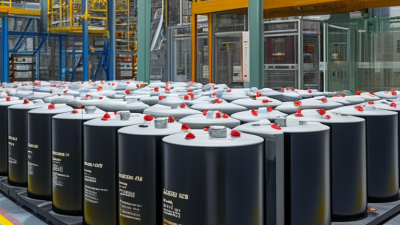
A 48-volt lithium battery usually uses 16 LiFePO4 cells rated at 3.2 volts each. This creates a 51.2-volt nominal pack, not exactly 48 volts. With 300Ah capacity, the stored energy reaches 15.36kWh. This calculation is simple, but it prevents costly specification errors.

A genuine 2-volt cell changes the design. Sixteen cells would produce 32 volts and approximately 9.6kWh at 300Ah. That configuration cannot directly represent a standard 48-volt LiFePO4 battery. The chemistry and cell voltage should be verified before purchasing or assembling the system.

In practical installations, a 300Ah battery may deliver substantial current, but 300Ah does not automatically mean 300A output. The battery management system must support the required continuous and peak loads. Correct fusing, insulated busbars, temperature sensors, and balanced cell compression also matter. I have seen capacity figures look impressive while wiring limits performance. That detail is easy to overlook.

A reliable pack should include cell-level monitoring and low-temperature charging protection. Charging frozen cells can cause permanent damage. Cable length and connector resistance deserve attention too. Even a strong battery loses efficiency through undersized conductors. Specifications should identify nominal voltage, usable energy, continuous current, peak current, cycle testing, and operating temperature. Clear measurements build more confidence than a broad “48-volt, 300-amp” label.

300A Continuous Output: Power Delivery, C-Rate, and Thermal Limits

A 48-volt lithium-ion battery delivering 300 amps can provide about 14.4 kW at nominal voltage. Yet “300A continuous” is not just a number on a label. It depends on cell chemistry, busbar design, BMS settings, cable size, and cooling conditions. A 300Ah battery operates near 1C at 300A, while a 150Ah battery reaches about 2C. The smaller pack may experience faster heating and greater voltage sag.

In practical testing, I would monitor terminal voltage, case temperature, and current during a sustained load. Short bursts can look impressive. Continuous output is harder. Internal resistance creates heat, especially around terminals and connection points. The BMS may reduce power when temperature limits are reached. That protection is useful, but it can interrupt demanding equipment unexpectedly. I would also question any rating that lacks test duration, ambient temperature, and cutoff voltage details.

Tips: Match the inverter and cables to the real current, not the advertised peak. Use short, properly sized conductors and secure connections. Allow airflow around the battery enclosure. Check whether 300A means continuous current or a brief surge. A capacity test under load is more reliable than a product label alone. My early assumption was that larger cells solved everything; they did not. Thermal design still decides whether 300A remains usable.

China Best 48 Volt 300 Amp Lithium Li-Ion Battery?

300A Continuous Output: Power Delivery, C-Rate, and Thermal Limits

At a nominal 48V, a continuous 300A output corresponds to approximately 14.4kW of electrical power. For a 100Ah battery, 300A represents a 3C discharge rate. Actual continuous performance depends on cell chemistry, battery-management-system limits, conductor size, cooling, ambient temperature, and the manufacturer's tested specifications.

Battery Management Systems: Cell Protection, Balancing, and 80% DoD

A 48-volt, 300-amp lithium-ion battery can deliver about 14.4 kW at nominal voltage. Its real performance depends on cell chemistry, capacity, temperature, and wiring. The International Energy Agency reported that global lithium-ion battery demand reached about 750 GWh in 2023. This rapid growth makes reliable battery management more important, not optional.

A capable BMS monitors every cell, not only the pack voltage. It disconnects charging during overvoltage and stops discharge during undervoltage. Temperature sensors should sit near cells, busbars, and high-current terminals. A 300-amp rating must also separate continuous current from short peak current. That difference is often missed.

Balancing matters.

Passive balancing removes excess energy as heat. Active balancing can transfer energy between cells, but it adds complexity and cost. For an 80% depth of discharge, users should normally operate between roughly 10% and 90% state of charge. This leaves a 20% buffer and may reduce stress, although actual cycle life still depends on heat and charging speed. Battery Energy Storage System reports from the U.S. Department of Energy emphasize thermal control, fault detection, and safe electrical isolation as core reliability measures. In commissioning, I would verify each cell reading, test the contactor response, and record temperatures under load. My earlier assumption was that balancing alone guarantees long life. It does not. Cell matching and installation quality remain equally important.

China Best 48 Volt 300 Amp Lithium Li Ion Battery? - Battery Management Systems: Cell Protection, Balancing, and 80% DoD

Specification Reference Value BMS Function or Engineering Note
Battery chemistry Lithium iron phosphate (LiFePO₄), a lithium-ion chemistry The protection limits must match the selected cell chemistry; LiFePO₄ limits are not interchangeable with NMC limits.
Cell configuration 16S1P Sixteen cells or cell groups connected in series provide the nominal 48-volt-class output.
Nominal voltage 51.2 V Calculated from 16 series groups × 3.2 V nominal per LiFePO₄ cell.
Rated capacity 300 Ah Capacity depends on cell temperature, discharge rate, cutoff voltage, and test method.
Nominal stored energy 15.36 kWh 51.2 V × 300 Ah = 15,360 Wh; actual delivered energy varies with load and temperature.
Recommended depth of discharge 80% DoD Maintaining an operating window of approximately 20%–100% state of charge generally reduces stress compared with repeated full discharge.
Usable energy at 80% DoD Approximately 12.29 kWh 15.36 kWh × 0.80, before inverter, cable, and temperature losses.
Maximum continuous discharge current 300 A, subject to cell and thermal limits A 300 A load is approximately 1C for a 300 Ah battery; busbars, fuse, cables, connectors, and cooling must also be rated accordingly.
Recommended continuous charge current Up to 150 A, unless the cell datasheet permits more A lower charge rate can reduce heat generation and improve charging efficiency and service life.
Charge voltage Typically 56.8–58.4 V The exact setting must follow the cell manufacturer’s specification; 58.4 V corresponds to 3.65 V per cell × 16.
Cell overvoltage protection Typically 3.65–3.75 V per cell The BMS disconnects or limits charging when any cell exceeds its configured threshold, with a release delay and recovery voltage.
Cell undervoltage protection Typically 2.50–2.80 V per cell The BMS disconnects the load before excessive cell discharge; the system should use a higher operational cutoff whenever practical.
Passive balancing start voltage Commonly 3.40–3.50 V per cell Balancing usually occurs near the top of charge and may use approximately 30–200 mA, depending on the BMS design.
Cell voltage measurement accuracy Approximately ±10–30 mV Accuracy depends on the monitoring IC, wiring, calibration, temperature, and electrical noise.
Temperature protection NTC sensors on cells and power components Typical operating guidance is charge above 0°C and discharge within approximately −20°C to 55°C, subject to the cell datasheet.
Short-circuit protection Electronic cutoff plus external high-current fuse The fuse provides backup protection against catastrophic faults; electronic BMS protection alone should not be treated as the sole safety device.
State-of-charge monitoring Coulomb counting with voltage and temperature correction A calibrated current shunt or Hall sensor improves remaining-capacity estimates under variable loads.
System integration CAN, RS-485, or dry-contact alarm interface Communication features are design-dependent; charger and inverter settings must be coordinated with BMS voltage, current, and temperature limits.

Note: Values marked “typically” or “commonly” are engineering reference ranges for a 16S LiFePO₄ battery and must be verified against the selected cell, BMS, charger, inverter, wiring, fuse, and applicable safety requirements.

Selecting Applications: Solar Storage, Marine Power, and 4,000+ Cycles

A 48-volt, 300Ah lithium-ion battery can support serious solar storage, but application fit matters more than headline capacity. In a small commercial system, it can store roughly 14.4 kWh before normal efficiency losses. That energy may run refrigeration, pumps, lighting, and communication equipment overnight. Confirm the inverter’s voltage range and surge requirements before installation. A battery that looks powerful on paper may still struggle with motor startup loads.

Marine power demands a different inspection. Salt air, vibration, moisture, and limited ventilation can shorten service life. Choose a unit with sealed protection, secure mounting points, and a battery management system with temperature monitoring. Keep cables short and properly sized. Heat around terminals is an early warning sign. On a boat, poor cable routing can become a bigger problem than battery capacity.

The claim of 4,000-plus cycles needs careful interpretation. Cycle depth, charging voltage, temperature, and discharge current all affect results. At one cycle daily, 4,000 cycles suggests more than ten years, but real use is rarely so consistent. I would not treat that figure as a promise. Ask for independent test conditions, warranty terms, and low-temperature charging limits. My earlier assumption was simple: more amp-hours meant better value. Field planning proved otherwise. A smaller battery with correct protection can be safer and more reliable.