Leave Your Message

How to Choose 51.2V 160Ah Li Ion Batteries?

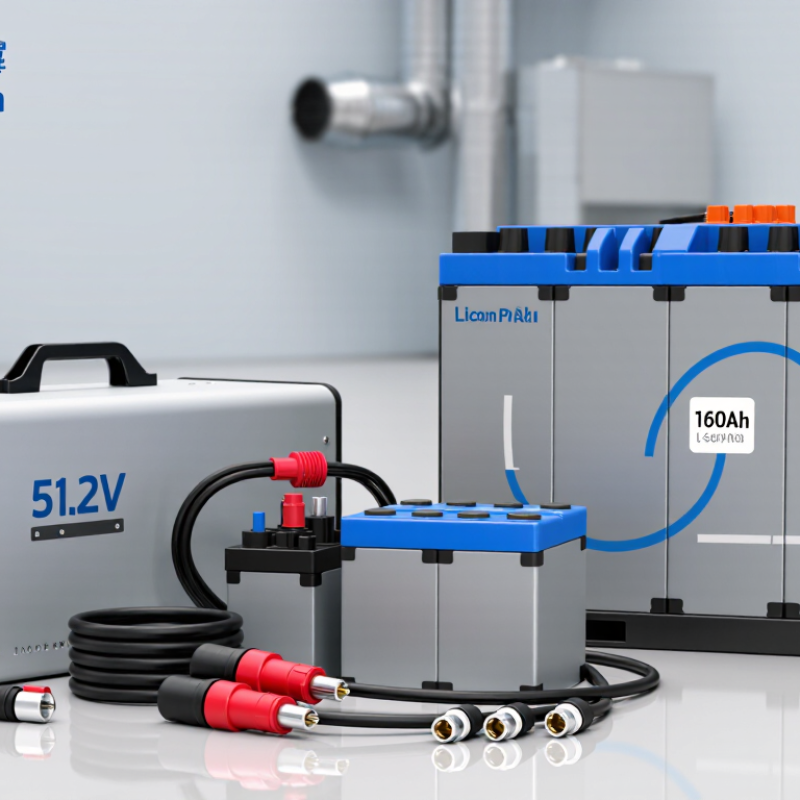
Choosing the right 51.2 V 160ah Li Ion Batteries requires more than comparing prices or capacity labels. A 51.2-volt, 160Ah battery stores about 8.2kWh under ideal conditions. Usable energy will be lower, depending on the battery management system and recommended depth of discharge. This difference matters when powering solar storage, backup equipment, or low-speed electric vehicles.

Look closely at the chemistry. Many 51.2V systems use lithium iron phosphate, which is valued for thermal stability and long service life. However, performance still depends on cell quality, operating temperature, charging limits, and battery balancing. Ask for verified data, not vague claims. Check continuous discharge current, peak current, cycle-life test conditions, and expected capacity retention. A 160Ah label alone does not explain whether the battery can run a heavy inverter.

Safety details deserve equal attention. Confirm that the BMS protects against overcharge, over-discharge, short circuits, and excessive temperature. The charger must match the battery’s voltage profile. Confirm communication compatibility with the inverter. Look for traceable manufacturing information and relevant transport or product test documentation, such as UN38.3 where applicable. Installation also needs suitable cables, fuses, ventilation, and professional guidance.

Real-world selection is rarely perfect. A larger battery may still disappoint in cold weather or poor wiring conditions. Testing the complete system is wise. Small oversights matter. Compare warranties carefully, because cycle counts can hide restrictive conditions. The best choice balances safety, usable energy, current demand, service support, and honest documentation rather than relying on one impressive specification.
How to Choose 51.2V 160Ah Li Ion Batteries?

Define the Core Specifications of a 51.2V 160Ah Li-Ion Battery

How to Choose 51.2V 160Ah Li Ion Batteries?

Define the Core Specifications of a 51.2V 160Ah Li-Ion Battery

A 51.2V, 160Ah battery stores about 8.19 kWh under nominal conditions. Actual energy will be lower after conversion losses and the selected depth of discharge. Confirm whether the stated capacity is rated at a specific temperature and test current. These details affect real performance.

Check the cell chemistry before comparing prices. Many 51.2V systems use sixteen 3.2V lithium iron phosphate cells. This chemistry offers strong thermal stability and a long service life when properly managed. Review the battery management system carefully. It should provide overcharge, over-discharge, overcurrent, short-circuit, and temperature protection. Ask for continuous charge and discharge ratings, not only peak figures. Peak power may last seconds.

Installation conditions matter. Measure the cabinet, terminal clearance, cable route, and ventilation space. A battery may fit on paper but fail during maintenance. Confirm the recommended charging voltage, operating temperature, communication protocol, and compatible inverter range. Look for documented cycle-life testing, warranty terms, and safety certification from recognized laboratories. Field experience shows that loose connections and excessive heat often reduce performance faster than expected. I have also seen capacity claims judged without checking the test method. That comparison is unreliable. Leave a margin for aging, cold weather, and unexpected loads. Exact calculations are useful, but real installations remain imperfect.

Match Battery Capacity With Your Energy and Runtime Requirements

How to Choose 51.2V 160Ah Li Ion Batteries?

A 51.2V 160Ah lithium-ion battery stores about 8.19 kWh of nominal energy. That figure is only the starting point. If you plan to use 80% of the capacity and allow 90% power-conversion efficiency, practical delivered energy falls to approximately 5.90 kWh. At a steady 1 kW load, runtime may approach 5.9 hours. A 2 kW load could reduce it to roughly 2.95 hours. Actual results change with temperature, battery age, inverter losses, and short power surges. Small details matter.

The U.S. Energy Information Administration reported average residential electricity consumption of about 899 kWh per month in 2023, or nearly 30 kWh daily. One 51.2V 160Ah unit therefore cannot normally cover an entire average home for a full day. It may support essential loads, such as a refrigerator, lights, router, and selected medical equipment, depending on local regulations and professional installation requirements. A 5 kW inverter draws nearly 98A at nominal voltage, so its continuous current rating must match the battery management system. Check this carefully. A neat calculation is not enough.

For better sizing, record actual appliance wattage and expected operating hours. Multiply watts by hours, then add a reserve for cloudy weather, aging, and unexpected demand. Industry assessments commonly model lithium-ion systems with round-trip efficiency below 100%; treating all 8.19 kWh as usable creates an optimistic estimate. That mistake is easy to make.

How to Choose 51.2V 160Ah Li Ion Batteries? - Match Battery Capacity With Your Energy and Runtime Requirements
Selection Dimension Reference Value How It Is Calculated Practical Selection Guidance
Nominal battery voltage 51.2 V 16 series-connected 3.2 V LiFePO4 cells Confirm that the inverter, charger, or DC load is designed for a 48 V-class battery system.
Rated battery capacity 160 Ah Rated charge capacity under the battery manufacturer’s specified test conditions Ah describes charge capacity; it should be converted into watt-hours when comparing energy requirements.
Nominal stored energy 8.192 kWh 51.2 V × 160 Ah = 8,192 Wh This is the theoretical nominal energy. Actual delivered energy varies with temperature, discharge rate, age, and the battery management system.
Recommended planning energy Approximately 7.37 kWh 8.192 kWh × 90% planning depth of discharge Using a planning depth of discharge below 100% leaves an operating reserve and can support longer service life. The permitted range must follow the battery specification.
Estimated usable AC energy Approximately 6.78 kWh 7.37 kWh × 92% representative inverter efficiency Use this value for preliminary AC load and runtime planning. Actual inverter efficiency changes with load level and operating mode.
Approximate runtime at 500 W AC load 13.6 hours 6.78 kWh ÷ 0.50 kW Suitable for low-power loads such as networking equipment, lighting, communications equipment, or selected refrigeration loads.
Approximate runtime at 1,000 W AC load 6.8 hours 6.78 kWh ÷ 1.00 kW A practical reference point for moderate household, backup, or small off-grid loads.
Approximate runtime at 2,000 W AC load 3.4 hours 6.78 kWh ÷ 2.00 kW Check inverter surge capability before connecting motors, pumps, compressors, or other high-starting-current equipment.
Approximate runtime at 3,000 W AC load 2.3 hours 6.78 kWh ÷ 3.00 kW Verify the battery’s continuous discharge-current rating, cable size, fuse rating, and inverter compatibility at this power level.
Approximate DC current at 1,000 W 19.5 A 1,000 W ÷ 51.2 V Allow additional current for inverter losses and transient loads when sizing cables, disconnects, and overcurrent protection.
Approximate DC current at 3,000 W 58.6 A 3,000 W ÷ 51.2 V At high power, installation quality and thermal management become increasingly important. Use the BMS continuous-current limit as the controlling value.
Full-charge voltage reference About 58.4 V 16 cells × 3.65 V per cell for a typical LiFePO4 charging limit Use the exact charging voltage specified for the selected battery. Do not apply a lithium charging profile without confirming cell chemistry and BMS requirements.
Charging energy from 20% to 100% Approximately 6.55 kWh stored 8.192 kWh × 80% Input energy from the charger will be higher because of charging and conversion losses.
Charging time at 50 A Approximately 3.2 hours ideal 160 Ah ÷ 50 A Real charging time is usually longer because the charging current may taper near full charge. Confirm the battery’s permitted charge current.
Charging time at 80 A Approximately 2.0 hours ideal 160 Ah ÷ 80 A Only use this current if it is within the battery, charger, wiring, and BMS ratings.
Temperature considerations Performance changes with temperature Battery capacity and allowable charge current are temperature-dependent Protect the battery from extreme heat and cold. Charging below freezing may require a low-temperature cutoff or a battery heating function.
System compatibility checklist 48 V-class equipment Voltage, current, communication, protection, and mounting requirements must all match Before purchase, verify inverter voltage range, charger profile, maximum charge/discharge current, BMS protections, cable terminals, enclosure space, and installation environment.
Planning note: Runtime figures are estimates based on 90% usable depth of discharge and 92% inverter efficiency. Actual results depend on load profile, battery temperature, battery age, discharge rate, inverter efficiency, and the specific battery management system.

Evaluate Chemistry, Cycle Life, Safety, and Battery Management Features

Choosing a 51.2V 160Ah lithium-ion battery starts with chemistry. Lithium iron phosphate, or LFP, usually offers strong thermal stability and long service life. Nickel-based chemistries can provide higher energy density, but they may require stricter temperature control. A 51.2V LFP pack commonly uses sixteen cells in series. Its nominal energy is about 8.2 kWh.

Cycle-life figures need careful reading. A claim of 6,000 cycles may assume shallow discharges, moderate temperatures, and controlled charging. Real installations often face heat, dust, high loads, or irregular maintenance. Ask for test conditions, end-of-life capacity, and recommended depth of discharge. Do not compare numbers from different testing methods. That comparison can mislead.

Safety depends on more than cell chemistry. Look for a battery management system with overcharge, over-discharge, overcurrent, and short-circuit protection. Temperature sensors should monitor both cells and power connections. Cell balancing helps prevent gradual capacity differences, although balancing cannot repair damaged cells. Communication features can report voltage, current, temperature, and alarm history to an inverter or monitoring system. Check continuous and peak current ratings against the actual load, such as a 5 kW inverter starting a motor. Certification reports and traceable test documents add confidence. Still, paperwork is not a substitute for correct installation. Leave clearance around the enclosure, use suitable cables, and review the manual with a qualified technician. Perfect batteries do not exist. Your operating conditions may expose weaknesses that laboratory testing misses.

How to Choose 51.2V 160Ah Li-Ion Batteries

A 51.2V 160Ah battery has approximately 8.19kWh of nominal energy (51.2V × 160Ah). The chart shows typical cycle-life ranges when operated at approximately 80% depth of discharge. Actual results depend on cell quality, operating temperature, charge rate, discharge rate, and system design.

  • LFP: Strong thermal stability, long service life, and a good fit for stationary energy storage.
  • NMC: Higher energy density, but generally a shorter cycle life and greater thermal-management requirements than LFP.
  • LTO: Very long cycle life and excellent low-temperature performance, but usually lower energy density and higher cost.
  • BMS features to verify: Cell-voltage monitoring, temperature sensors, balancing, overcharge and over-discharge protection, overcurrent protection, short-circuit protection, SOC/SOH estimation, and communication interfaces such as CAN or RS-485.

Check Compatibility With Inverters, Chargers, Loads, and Installation Space

How to Choose 51.2V 160Ah Li Ion Batteries?

A 51.2V 160Ah battery stores about 8.2kWh under ideal conditions. Real usable energy depends on the battery management system, temperature, and discharge limits. Check the inverter’s battery voltage range before purchasing. Its maximum charging voltage must match the battery specifications. Never assume that every 51.2V battery uses the same charging profile.

Review continuous and peak current requirements carefully. A 5kW inverter can draw nearly 98 amps at 51.2V, before efficiency losses. Starting motors may demand much more for several seconds. The battery BMS must handle these surges without disconnecting. Chargers also need compatible voltage, current, and lithium charging settings. A charger designed for another chemistry can cause poor performance or unsafe operation. Small details matter.

Measure the installation area, not just the battery case. Leave room for cable bends, terminals, ventilation, inspection, and maintenance. Confirm the floor can support the battery’s weight. Keep high-current cables short and correctly sized. I have seen capacity estimates look perfect, yet the system struggled because the inverter surge rating was ignored. That shortcut is easy to make. Recheck household loads, starting currents, future expansion, and operating temperature. A rough spreadsheet is useful, but it should not replace the manufacturer’s technical data.

Compare Warranty, Certifications, Maintenance Needs, and Total Cost

Choosing a 51.2V 160Ah lithium-ion battery requires more than checking its 8.19 kWh nominal capacity. Compare the warranty’s years, cycle limit, retained capacity, and claim process. A ten-year warranty may exclude high temperatures, deep discharge, or poor installation. Look for clear coverage terms and documented testing. Relevant certifications may include IEC 62619, UL 1973, and UN 38.3, depending on the application and transport requirements. Verify certificates with the issuing laboratory, not only a sales document.

Maintenance needs also affect real ownership costs. A well-designed battery should include a battery management system, cell balancing, temperature protection, and readable monitoring data. Ask whether firmware updates, inspections, or replacement parts require a specialist visit. In a clean indoor cabinet, routine work may be limited to checking connections and recording performance. Outdoor installations can demand more attention. Dust, moisture, and heat are easy to underestimate.

Tips: Calculate usable energy, not only rated energy. If the system recommends an 80% depth of discharge, usable capacity is closer to 6.55 kWh. Add installation, inverter compatibility, shipping, monitoring, insurance, and expected replacement costs. Compare cost per usable cycle across the warranty period. A cheaper battery can become expensive after service delays or early capacity loss. I would also request a sample warranty claim procedure. It may reveal more than impressive specifications.