China Top 10 48V 300Ah Lithium Battery Manufacturers?
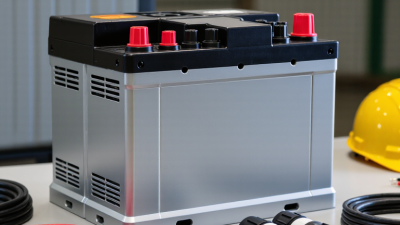
A 48V 300Ah lithium battery stores about 14.4 kWh of nominal energy. That figure looks simple. Real-world performance depends on cell quality, battery management, temperature, and installation. Buyers comparing China’s leading manufacturers should examine these details alongside price and advertised cycle life.
The International Energy Agency’s Global EV Outlook 2024 reported that electric-vehicle battery demand reached about 750 GWh in 2023, roughly 40% above 2022. This is not a market-size estimate for 48V storage batteries. It does, however, show how quickly battery supply chains are expanding. IEA Executive Director Fatih Birol has repeatedly highlighted batteries’ importance to the clean-energy transition. His point matters here: manufacturing scale alone cannot prove a battery is dependable.
This guide compares ten Chinese manufacturers through practical criteria: cell sourcing, capacity claims, warranty terms, safety documentation, and support after purchase. Look for traceable test reports, clear operating limits, and real service contacts—not just polished product photos. The phrase “48 Vot 300 Amp Lithium Li-Ion” appears in some searches, though it is not standard technical wording. A ranking also has limits. Supplier data can be incomplete, and advertised figures may not match field results. Check carefully.
Understanding 48V 300Ah Lithium Battery Specifications and Applications
A 48V 300Ah lithium battery stores substantial energy, but its label does not tell the whole story. At 48 volts, nominal energy is about 14.4 kilowatt-hours; a 51.2-volt model provides 15.36 kilowatt-hours. Check the stated voltage, usable capacity, and battery chemistry. Lithium iron phosphate is commonly chosen for its thermal stability and long service life. Actual performance still depends on temperature, charging limits, and discharge depth.
These batteries can support home solar storage, backup power, telecom equipment, and mobile or off-grid systems. A 51.2-volt battery delivering 100 amps supplies about 5.12 kilowatts before inverter losses. That figure matters when matching the battery to an inverter or other load. Check the battery management system’s continuous current rating, not just its peak rating. Peak output may last only briefly.
Installation details matter. Confirm dimensions, terminal type, communication protocols, and approved parallel connections before purchase. Ask how cycle-life figures were tested, including temperature and depth of discharge. A neat specification sheet can still leave questions unanswered. I would also allow room for ventilation and service access, even when the enclosure appears compact. In real installations, cable length and ambient heat can affect performance more than expected.
Understanding 48V 300Ah Lithium Battery Capacity and Applications
A 48V, 300Ah battery has a nominal energy capacity of 14.4kWh (48V × 300Ah). The chart shows calculated theoretical runtime at different loads, assuming the full nominal capacity is available.
Note: Actual runtime is typically lower and depends on usable battery capacity, inverter efficiency, temperature, battery condition, and the load profile. Common applications include off-grid solar storage, backup power, and recreational vehicles.
Criteria for Evaluating Chinese Lithium Battery Manufacturers
Evaluating a Chinese lithium battery manufacturer starts with traceable evidence, not a polished product sheet. For a 48V 300Ah unit, ask how the stated capacity was measured, including test temperature, discharge rate, and cutoff voltage. Numbers need context. Request recent test records linked to the production batch, rather than a single sample result.
Check whether the manufacturer can explain its cell sourcing, battery management system, and quality checks in practical terms. The BMS should document protections such as overcurrent, overtemperature, and low-voltage cutoff. Ask for continuous and peak current ratings, plus the conditions behind any cycle-life claim. A clear test method matters more than an impressive headline figure. It is easy to overlook how installation temperature or charging habits can affect real-world service life.
Factory capability deserves a closer look. Review production and inspection procedures, and ask how the company handles rejected cells and warranty claims. If possible, inspect a sample and compare its label, enclosure, terminals, and monitoring data with the supplied specifications. Independent reports and customer references can add useful context, though neither guarantees future performance. One detail may still be missed: written answers often sound certain, while field conditions are not. A reliable supplier should acknowledge those limits and provide specific, verifiable information.
Profiles of 10 Chinese 48V 300Ah Lithium Battery Manufacturers
Profile 1 represents a cell-focused factory, where batch records and incoming inspection matter. Profile 2 describes an integrator pairing lithium cells with a battery management system. Ask how it handles temperature alarms and low-voltage cutoffs. Profile 3 specializes in rack-mounted units for telecom rooms, with attention to cable access and service clearance. Profile 4 serves solar storage projects, where inverter compatibility can matter more than a polished product photo.
Profile 5 reflects a workshop building custom enclosures for mobile or industrial equipment. Profile 6 emphasizes automated assembly and consistent fastening. Profile 7 offers compact wall-mounted designs, though real installation space should be checked. Profile 8 focuses on export packaging and documentation. Small details count. A damaged corner can delay commissioning.
Profile 9 is geared toward engineering support, such as reviewing load profiles before recommending capacity. Profile 10 prioritizes testing, traceability, and after-sales troubleshooting.
These are capability-based profiles, not verified company-specific claims or a ranked directory. Buyers should request test reports, warranty terms, and references for comparable installations.
A 48V 300Ah label alone tells little about usable energy, cycle conditions, or performance in cold rooms. That distinction is easy to miss.
Comparing Battery Features, Certifications, and Warranty Coverage
When comparing China’s 48V 300Ah lithium battery manufacturers, check the chemistry and usable energy before comparing prices. A 51.2V, 300Ah lithium iron phosphate pack stores about 15.36kWh nominally; usable energy depends on the battery management system and discharge limits. Details matter. The International Energy Agency reported that LFP batteries reached about 40% of the global electric-car battery market in 2023. That figure describes electric vehicles, not stationary storage, but it shows the chemistry’s growing importance.
Certifications need to match the exact battery model and intended use. Ask for test reports covering IEC 62619 for industrial lithium batteries and UN 38.3 transport testing, where relevant. Verify the model number, testing laboratory, and report date rather than relying on a logo in a brochure. Ask for proof. Also compare cell balancing, low-temperature charging protection, communication protocols, and the operating temperature range. A neat comparison table can still hide important differences.
Warranty coverage should state the term, cycle limit, minimum retained capacity, and conditions for valid claims. Check whether capacity is measured at a defined temperature and discharge rate. BloombergNEF reported an average lithium-ion pack price of $115 per kWh in 2024, but that market benchmark is not a quote for a certified storage battery. A low price may exclude installation, monitoring, or freight. This part is easy to overlook. Get the full warranty document and written service-response times before ranking suppliers.
How to Verify Suppliers and Choose the Right Manufacturer
A 48V, 300Ah battery represents about 14.4kWh at nominal voltage. Verify that the quoted capacity applies to the complete pack, not just its cells. Ask for the exact cell chemistry, usable capacity, operating temperature range, and continuous discharge rating. A spreadsheet is not enough. Request a model-specific test report showing charge and discharge conditions, cycle-life criteria, and results.
The IEA’s Global EV Outlook 2024 estimates that electric-vehicle battery demand reached about 750GWh in 2023, roughly 40% above 2022. That growth makes clear documentation and traceable components especially important. Check that certificates and test reports match the factory, model, and configuration being offered. Confirm their validity with the issuing body, and ask how the supplier tracks cell batches and handles warranty claims.
For a sample, record the pack’s weight, dimensions, terminal layout, and BMS readings. Then compare measured capacity with the datasheet using a defined test procedure. Ask to see protection behavior for overcurrent, high temperature, and low voltage. A polished brochure is not proof. I would still treat one sample as a clue, not a verdict; production consistency needs evidence from multiple batches, along with clear inspection records and a written change-control process.