Choosing a dependable 48vot 150amp Lithium battery supplier requires more than comparing catalog prices. This category supports solar storage, electric vehicles, marine systems, backup power, and industrial equipment. Each application demands different protection settings, charging limits, thermal controls, and communication features. A battery may look powerful on paper, yet perform poorly in cold weather or under repeated high-current loads.
Dr. Jeff Dahn, a leading lithium-ion battery researcher, has often emphasized this practical principle: “Battery life depends on chemistry, temperature, and how the cell is used.” His view explains why supplier evaluation must include real testing, not only attractive specifications. We will examine ten leading suppliers through cell quality, usable capacity, battery-management systems, cycle-life evidence, safety certification, warranty support, and production consistency. Details matter. A 48-volt pack should deliver stable voltage under load, while a 150-amp design needs reliable terminals, balanced cells, and carefully engineered protection.
Some suppliers publish impressive cycle numbers. Not all explain the testing conditions. That gap deserves attention. Buyers should ask whether results came from controlled laboratory testing or daily field operation. They should also check enclosure strength, connector quality, installation guidance, and after-sales response. Our comparison will not treat every manufacturer equally, because pricing, regional service, and application suitability can change the final decision. One weakness remains unavoidable: supplier data is not always presented in the same format. Careful readers should verify current certifications and technical documents before ordering.
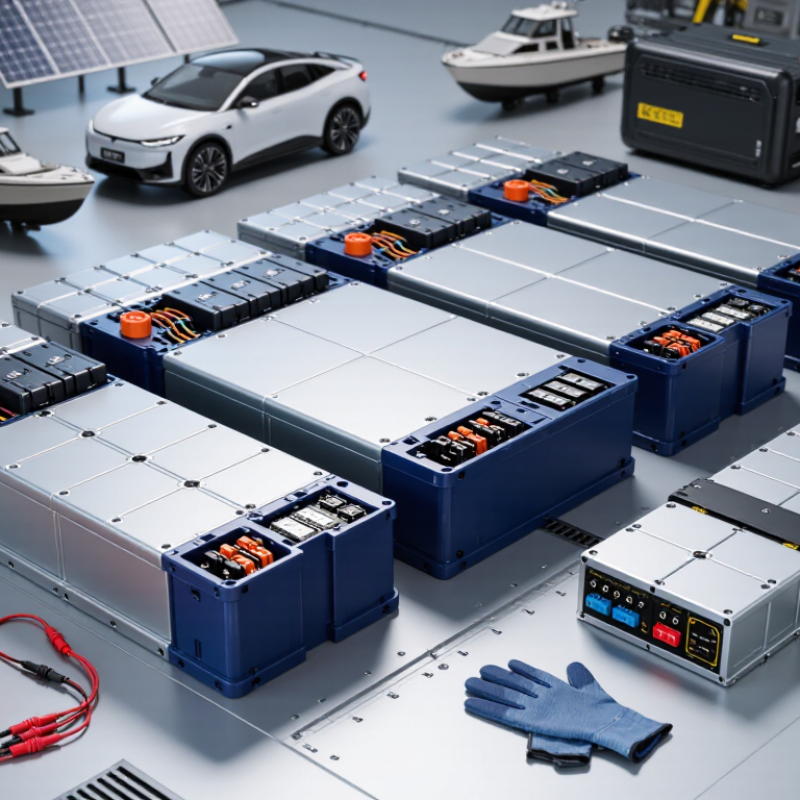
A 48V 150A lithium battery can deliver 7.2kW at nominal voltage. The calculation is simple: 48V multiplied by 150A. Real output varies with voltage, temperature, wiring, and inverter efficiency. A 51.2V LiFePO4 pack may produce slightly higher power at full charge. Continuous current must not be confused with peak current. Check the battery management system rating carefully.
LiFePO4 chemistry offers strong thermal stability and long cycle potential. It also avoids cobalt and nickel, which can simplify material sourcing. The International Energy Agency reported that global battery demand exceeded 750GWh in 2023, showing rapid growth across transport and stationary storage. BloombergNEF reported an average lithium-ion pack price of 139 dollars per kWh in 2023, while LFP packs averaged about 130 dollars. These figures are market benchmarks, not supplier quotations.
For China-based suppliers, buyers should verify cell traceability, UN 38.3 transport testing, IEC-related safety documentation, and independent capacity tests. A practical inspection should include discharge testing near 150A, not only a printed label. Cable heating can become obvious within minutes. It is easy to overstate runtime. A 7.2kW load may drain a 7.68kWh battery in roughly one hour, before conversion losses and reserve limits. Suppliers should publish test conditions, because optimistic specifications still appear in this market.
China Top 10 48V 150Amp Lithium Battery Suppliers
Supplier selection should begin with verified cycle data, not a headline figure. The International Energy Agency’s Global EV Outlook 2024 identifies lithium iron phosphate as a major cost and safety-focused chemistry. However, chemistry alone does not guarantee long service life. Ask suppliers to define cycle conditions, including discharge depth, temperature, charging current, and end-of-life capacity. A 6,000-cycle claim means little without these details.
For a 48V 150Ah battery, request test records showing capacity retention after 200, 1,000, and 6,000 cycles. The 80% usable-capacity threshold is widely used as a practical battery end-of-life benchmark in industry testing guidance. Confirm whether “usable” means rated capacity, delivered energy, or energy after inverter losses. These details change the result. They matter greatly.
The U.S. Department of Energy’s battery research reports emphasize that temperature and operating conditions strongly influence degradation. Therefore, suppliers should provide thermal data and protection settings, not only laboratory graphs. I would also inspect sample batteries, BMS logs, busbar design, and warranty exclusions. A supplier may pass a controlled test yet perform poorly in a hot warehouse. No test is perfect. Independent retesting is worth the extra cost, especially when comparing 200-cycle entry models with 6,000-cycle premium units.
China’s top ten 48V 150Ah lithium battery suppliers compete through scale, certification, and focused applications. A 48V 150Ah pack stores about 7.2kWh under nominal conditions. Larger factories often operate automated assembly lines, cell grading stations, and aging rooms. Their output may serve residential storage, telecom backup, low-speed vehicles, and industrial equipment. Production scale matters, but volume alone does not prove reliability.
Experienced buyers should examine ISO 9001 systems, UN38.3 transport testing, and IEC 62619 safety compliance. CE documentation may support sales in relevant markets, but requirements vary by destination. Ask for cell traceability, battery management system settings, thermal test records, and warranty terms. Leading suppliers usually provide sample testing before mass production. Some offer custom communication protocols and enclosure designs. Yet certification documents can become outdated. Verify testing dates and issuing laboratories.
Tips: Request a recent factory audit and a complete test package. Compare usable energy, not only rated capacity. Check performance at low temperatures and under continuous discharge. Ask how rejected cells are handled. A supplier may quote impressive cycle life, but test conditions can differ greatly. Confirm the exact definition of one cycle. Market focus is also important. A storage specialist may not understand vehicle vibration requirements. Conversely, an automotive-focused factory may offer limited residential support. Small gaps in documentation often reveal bigger supply-chain weaknesses.
| Rank | Anonymous Supplier Profile | Typical 48V 150Ah Configuration | Nominal Energy | Production Scale Indicator | Commonly Offered Certifications | Cell Chemistry and Format | Primary Market Focus | Typical Applications | Customization Capability |
|---|---|---|---|---|---|---|---|---|---|
| 1 | Profile 01 — Large Export-Oriented Manufacturer | 51.2V, 150Ah, 150A continuous discharge | 7.68 kWh | High-volume production; standardized rack and wall-mounted models | UN 38.3, IEC 62619, CE, RoHS; selected models may support UL 1973 | LiFePO₄ prismatic cells | Europe, North America, Australia, and Southeast Asia | Residential energy storage, telecom backup, small commercial systems | CAN/RS485 protocols, enclosure color, terminal layout, firmware settings |
| 2 | Profile 02 — Integrated Energy-Storage Producer | 51.2V, 150Ah, 150A continuous discharge | 7.68 kWh | Medium-to-large scale; battery packs and complete ESS cabinets | UN 38.3, IEC 62619, CE, EMC, RoHS, ISO 9001 | LiFePO₄ prismatic cells with active BMS monitoring | Grid-tied and off-grid projects in Asia, Africa, and Latin America | Solar-plus-storage, microgrids, commercial backup power | Parallel expansion, inverter communication, cabinet integration |
| 3 | Profile 03 — Telecom Backup Specialist | 51.2V, 150Ah, 150A continuous discharge | 7.68 kWh | Medium scale; repeat production of 19-inch rack-compatible packs | UN 38.3, IEC 62619, CE, RoHS; regional telecom approvals as required | LiFePO₄ prismatic or high-rate cylindrical cells | Telecommunications and data infrastructure markets | Base stations, network cabinets, UPS and DC power systems | Rack dimensions, low-temperature charging protection, SNMP or RS485 options |
| 4 | Profile 04 — Residential Solar Battery Producer | 51.2V, 150Ah, 150A continuous discharge | 7.68 kWh | Medium-to-large scale; modular wall-mounted and floor-standing products | UN 38.3, IEC 62619, CE, RoHS; selected markets may require IEC 63056 or UL 1973 | LiFePO₄ prismatic cells | Residential solar markets in Europe, Australia, and emerging economies | Home energy storage, self-consumption, backup power | Stackable modules, inverter compatibility, display and communication options |
| 5 | Profile 05 — Industrial Battery-Pack Manufacturer | 51.2V, 150Ah, 150A continuous discharge | 7.68 kWh | Medium scale; project-based assembly with engineering support | UN 38.3, IEC 62619, CE, RoHS, ISO 9001 | LiFePO₄ prismatic cells with reinforced busbars | Industrial automation, material handling, and equipment manufacturers | AGVs, floor-cleaning machines, forklifts, and mobile industrial equipment | Mechanical housing, connector selection, current limits, and CAN integration |
| 6 | Profile 06 — OEM and Private-Label Supplier | 51.2V, 150Ah, 150A continuous discharge | 7.68 kWh | Flexible batch production; optimized for contract manufacturing | UN 38.3, CE, RoHS, IEC 62619; certification depends on the final OEM design | LiFePO₄ prismatic cells; cylindrical options may be available | Global distributors, system integrators, and equipment OEMs | Special-purpose vehicles, portable power, marine and recreational systems | High; branding, enclosure, BMS firmware, connectors, and application-specific testing |
| 7 | Profile 07 — Portable and Recreational Power Supplier | 51.2V, 150Ah, 150A continuous discharge | 7.68 kWh | Small-to-medium scale; product variants assembled in flexible batches | UN 38.3, CE, RoHS; additional transport and market approvals may apply | LiFePO₄ prismatic or cylindrical cells | Marine, RV, camping, and outdoor power markets | Motorhomes, boats, off-grid cabins, and mobile power systems | Water-resistant enclosures, heating systems, Bluetooth monitoring, and low-temperature protection |
| 8 | Profile 08 — Commercial UPS and Backup Supplier | 51.2V, 150Ah, 150A continuous discharge | 7.68 kWh | Medium scale; configured for repeat commercial and institutional orders | UN 38.3, IEC 62619, CE, EMC, RoHS; UL-related approvals where required | LiFePO₄ prismatic cells with redundant protection functions | Commercial facilities, healthcare, education, and data-support infrastructure | UPS systems, emergency backup, security systems, and control rooms | Battery cabinets, alarm interfaces, dry contacts, and monitoring gateways |
| 9 | Profile 09 — Cost-Competitive Regional Exporter | 51.2V, 150Ah, 100–150A continuous discharge | 7.68 kWh | Medium scale; standardized models with cost-focused assembly | UN 38.3, CE, RoHS; IEC 62619 availability depends on the model | LiFePO₄ prismatic cells | Africa, South Asia, Southeast Asia, and Latin America | Home backup, small solar systems, retail energy-storage projects | Basic communication protocols, label changes, and standard enclosure modifications |
| 10 | Profile 10 — Engineering-Led Custom Battery Builder | 51.2V, 150Ah, 150A continuous discharge | 7.68 kWh | Small-to-medium scale; prototype, pilot, and low-volume project production | UN 38.3, CE, RoHS, ISO 9001; project-specific IEC or UL testing may be arranged | LiFePO₄ prismatic cells; alternative formats subject to design requirements | Specialized machinery, research projects, and niche energy-storage systems | Robotics, mobile equipment, test platforms, and bespoke off-grid systems | Very high; mechanical, electrical, thermal, software, and communications customization |
When evaluating China’s top 48V 150Ah lithium battery suppliers, safety documentation deserves close attention. UN38.3 testing supports safer transportation by checking vibration, shock, altitude, temperature, and external short-circuit conditions. Ask for complete test reports, not only a certificate number. Documents should match the exact battery model, cell type, and configuration.
IEC 62619 addresses safety for industrial lithium batteries, including abnormal operation and protection against thermal events. A qualified supplier should explain testing limits clearly. The battery management system, or BMS, should monitor voltage, temperature, current, and state of charge. It should also record faults and disconnect the pack during dangerous conditions. Practical details matter. Check whether sensors sit near cells, how many are installed, and whether firmware settings can be reviewed.
The 150A protection system needs careful verification. Confirm whether 150A means continuous current, short-term peak current, or merely a marketing label. A suitable fuse, contactor, or electronic cutoff should protect cables and cells during overloads. Ask for discharge curves at different temperatures. Cold performance is often overlooked. A supplier may provide polished documents, yet the wiring, terminals, or enclosure can still need improvement. In factory audits, small details such as loose busbar bolts have caused more concern than attractive specifications. Independent testing remains valuable, because compliance paperwork alone cannot reveal every production inconsistency.
For solar storage, a 48V 150Ah lithium battery usually offers a practical balance between capacity and installation size. Buyers should compare usable energy, cycle life, inverter compatibility, and BMS protection. A lower purchase price may hide weaker thermal control or limited communication functions. Solar systems also need stable performance during daily charging and discharge. Test reports, warranty terms, and cell traceability matter more than attractive photographs.
Forklifts demand a different cost calculation. High discharge capability, fast charging support, shock resistance, and safe battery replacement affect productivity. A battery with a higher initial price may reduce charging labor and downtime. Marine systems add corrosion, vibration, moisture, and restricted ventilation to the evaluation. Enclosures, connectors, and temperature protection must suit real onboard conditions. The cheapest option is not always economical. The comparison is imperfect without duty-cycle data.
Tips: Ask suppliers for load-test records, IP ratings, BMS settings, transport documents, and service response times. Request a sample or pilot installation before a larger order. Check whether the stated 150Amp rating means continuous current or peak current. That detail can change forklift and marine performance. A careful buyer should also review local recycling rules and installation requirements. Some specifications look clear, but still need verification.