Leave Your Message

China Top 10 48V 150Ah Battery Manufacturers?

China’s 48V 150Ah battery sector has expanded rapidly, serving solar storage, electric mobility, marine systems, and backup power. This guide examines China’s top 10 manufacturers of 48vot 150amp Battery solutions through practical industry criteria. These include cell chemistry, cycle life, thermal management, protection systems, certifications, factory capacity, warranty terms, and after-sales support.

Battery scientist Dr. Shirley Meng has emphasized the need to make batteries “better, cheaper, and safer.” That principle remains highly relevant here. A 48V 150Ah lithium battery may contain more than 7 kWh of stored energy, so design quality matters beyond the label. A reliable manufacturer should explain its cell origin, battery management system, operating temperature, charging limits, and tested cycle performance. Numbers alone are not enough.

Look closely.

The strongest suppliers usually provide traceable production records, clear technical datasheets, and realistic delivery schedules. Some manufacturers offer customized communication protocols, heated batteries, low-temperature protection, or aluminum enclosures. Others may advertise impressive cycle figures without explaining test conditions. That deserves caution.

This ranking is not a final verdict. Supplier quality can change with production batches, component sourcing, and service teams. Independent sample testing remains wise before large-scale purchasing. We also consider whether manufacturers support installation guidance, fault diagnosis, and responsible battery recycling. Those details may seem small, but they become important when batteries operate daily in a warehouse, cabin, or solar cabinet. The best choice is not always the cheapest one.

China Top 10 48V 150Ah Battery Manufacturers?

What Is a 48V 150Ah Battery and Where Is It Used?

A 48V 150Ah battery stores about 7.2 kWh at its nominal voltage. In lithium iron phosphate systems, the real configuration is often 51.2V and 150Ah, providing about 7.68 kWh. Usable energy is lower after reserve limits, temperature effects, and conversion losses. Small details matter.

This battery size suits solar backup, telecommunications cabinets, security systems, and compact commercial energy storage. A typical household could run lights, networking equipment, a refrigerator, and selected electronics for several hours. High-power heating loads would shorten that period sharply. It is not a universal replacement.

The International Energy Agency reported 42 GW of new battery storage capacity in the power sector during 2023, more than twice the previous year’s additions. Its 2024 Batteries and Secure Energy Transitions report also identifies stationary storage as a rapidly expanding battery application. Meanwhile, the U.S. National Renewable Energy Laboratory notes that battery lifetime depends strongly on depth of discharge, temperature, and cycling patterns. In practice, an experienced installer checks daily energy use before selecting this capacity. A 150Ah label can mislead. Incomplete load data remains a common design weakness.

For outdoor or telecom deployment, buyers should verify operating temperature, enclosure protection, communication protocols, warranty conditions, and thermal safety testing. Lithium systems usually offer higher usable capacity and lower maintenance than lead-acid alternatives, but they require compatible charging equipment and battery management controls. The best specification is not always the largest one.

Key Criteria for Evaluating Chinese 48V 150Ah Battery Manufacturers

When evaluating Chinese 48V 150Ah battery manufacturers, begin with the battery’s real specifications. A 48V 150Ah pack stores about 7.2 kWh before conversion losses. Ask whether capacity is tested at 25°C, at a defined discharge rate, and at the beginning or end of life. BloombergNEF’s 2024 Battery Price Survey reported an average lithium-ion pack price of 115 USD per kWh. Low pricing deserves careful checking, not automatic rejection.

Examine cell traceability, BMS functions, thermal protection, and factory quality controls. The BMS should record temperature, voltage balance, overcurrent events, and charge history. Request cycle-life data under conditions matching your project. “Over 6,000 cycles” means little without depth of discharge and remaining-capacity details. IEA’s Batteries and Secure Energy Transitions report says global battery storage capacity must expand substantially by 2030. Reliability will matter more than impressive brochures. A factory audit, sample testing, and warranty review provide stronger evidence than sales claims. No scorecard is perfect. Field conditions still expose weaknesses.

Tips: Check IEC 62619, UN 38.3, and applicable transport documentation. Confirm whether certificates cover the exact model. Test two or three samples independently. Review response times for replacement parts, firmware support, and fault analysis. Also inspect packaging, terminal protection, and labeling; small details often reveal production discipline.

Profiles of China’s Top 10 48V 150Ah Battery Manufacturers

China’s top ten 48V 150Ah battery manufacturers are best assessed by engineering depth, not advertising volume. A 48V 150Ah lithium iron phosphate pack stores about 7.2kWh before conversion losses. The strongest suppliers typically offer 5,000–8,000 cycle claims, integrated battery management systems, and CAN or RS485 communication. Their profiles often differ in application focus: telecom backup, residential storage, solar systems, low-speed vehicles, and industrial equipment.

According to BloombergNEF’s 2024 Battery Price Survey, global lithium-ion pack prices averaged 115 dollars per kWh, although regional pricing varies. This figure helps buyers compare a quotation, but it does not measure safety, warranty quality, or field support. The International Energy Agency reported in Batteries and Secure Energy Transitions that global energy storage capacity must expand substantially by 2030. That outlook supports demand for dependable 48V platforms. Several leading Chinese manufacturers now provide IP-rated cabinets, remote monitoring, thermal protection, and modular parallel expansion. Some also maintain ISO 9001-certified quality systems and use cell-level traceability.

A practical profile should examine discharge performance at 0°C, not only laboratory room temperature. It should also verify usable capacity, warranty exclusions, replacement procedures, and fire-testing documentation. One imperfect point remains: published cycle life can look precise while real installations face heat, uneven charging, and maintenance gaps. Buyers should request independent test records and recent project references before ranking any supplier.

China's Top 10 48V 150Ah Battery Manufacturers: Technical Reference

A 48V 150Ah battery has a nominal capacity of 150Ah and approximately 7.2kWh of nominal energy, calculated as 48V × 150Ah. The chart presents manufacturer-neutral electrical reference values rather than company or brand data. Usable energy varies according to the selected depth of discharge.

Comparison of Products, Technologies, Certifications, and Services

China Top 10 48V 150Ah Battery Manufacturers: Comparison of Products, Technologies, Certifications, and Services

A 48V 150Ah battery stores about 7.2 kWh under nominal conditions. When comparing ten Chinese manufacturers, buyers should examine chemistry, usable capacity, dimensions, and weight. Lithium iron phosphate batteries usually offer strong thermal stability and long service life. NMC designs may provide higher energy density. Product fit matters. A cabinet battery for solar storage should not be judged like a battery for a forklift.

Technology separates similar-looking products. Reliable units use a battery management system that monitors voltage, temperature, current, and balancing. CAN or RS485 communication helps connect the battery with inverters and monitoring platforms. Ask for discharge curves at different temperatures, not only a headline cycle number. One overlooked detail is low-temperature charging. Performance can fall sharply near freezing, and some systems require heating protection. I once found two datasheets with identical capacity claims, but their test conditions were completely different.

Certification documents should be checked against the exact model, cell type, and production site. Common evidence may include UN38.3 transport testing, IEC safety testing, CE documentation, and RoHS compliance where applicable. Certificates alone do not prove consistent manufacturing. Request sample test reports, factory quality procedures, traceability records, and warranty terms. Service quality also deserves comparison: remote diagnostics, spare parts, installation guidance, response times, and battery recycling support. A clear warranty should define capacity retention, operating temperature, excluded misuse, and claim procedures. Marketing language is sometimes vague. Detailed evidence is better.

China Top 10 48V 150Ah Battery Manufacturers? - Comparison of Products, Technologies, Certifications, and Services
Anonymous comparison of representative Chinese supplier profiles for 48V 150Ah lithium battery systems. Specifications are typical market configurations and should be confirmed against the final quotation, datasheet, and certification documents.
Rank Anonymous Supplier Profile Typical Product Configuration Battery Chemistry Nominal Voltage & Capacity Energy Capacity Cycle-Life Range BMS & Communication Common Certifications & Test Documents Customization & Technical Services Warranty Approach Typical Applications
01 Supplier Profile A Wall-mounted or floor-standing battery cabinet with integrated protection and display LiFePO4 prismatic cells 51.2 V / 150 Ah 7.68 kWh nominal; approximately 6.1–6.9 kWh usable depending on depth of discharge 4,000–6,000 cycles at 80% depth of discharge and 25°C Smart BMS; passive balancing; RS485/CAN; optional Wi-Fi or Ethernet gateway UN 38.3IEC 62619CE documentation Custom enclosure, cable length, connector type, inverter protocol, logo-free packaging, and installation guidance Commonly 5 years, subject to energy-throughput and operating-temperature conditions Residential energy storage, small commercial backup, telecom backup
02 Supplier Profile B Rack-mounted module designed for parallel connection and cabinet integration LiFePO4 prismatic cells 51.2 V / 150 Ah 7.68 kWh nominal; usable energy normally specified at 80–90% depth of discharge 4,000–5,000 cycles under standard laboratory conditions Dual-level BMS protection; RS485/CAN; multi-module addressing; event logging UN 38.3IEC 62619 test optionRoHS Rack dimensions, busbar layout, firmware settings, communication protocol, and parallel expansion support Typically 3–5 years with remote troubleshooting and replacement-part support Data rooms, backup power, off-grid solar, light industrial storage
03 Supplier Profile C Outdoor-rated battery cabinet with thermal management and emergency disconnect LiFePO4 prismatic cells 51.2 V / 150 Ah 7.68 kWh nominal; actual usable output depends on BMS limits and temperature 5,000–6,000 cycles at controlled temperature and moderate discharge rate Smart BMS; contactor control; temperature sensors; RS485/CAN; optional 4G monitoring UN 38.3IEC 62619IP-rated enclosure testing Outdoor cabinet, heating or cooling option, anti-condensation design, remote monitoring, and site commissioning Usually 5 years; service conditions often include temperature, humidity, and annual cycle limits Outdoor telecom sites, solar-plus-storage, microgrids, rural backup systems
04 Supplier Profile D Compact metal-case battery with front-panel breaker, state-of-charge display, and wall brackets LiFePO4 prismatic or high-capacity pouch cells 51.2 V / 150 Ah 7.68 kWh nominal; typical inverter setting uses 80% maximum continuous depth of discharge 3,500–5,000 cycles depending on cell grade and discharge rate Basic or smart BMS; RS485/CAN available; inverter compatibility list supplied on request UN 38.3MSDS/SDSCE technical file Front-panel layout, mounting method, cable set, display language, and charger or inverter matching Commonly 3 years, with paid extension options and spare-module availability Home backup, small shops, RV systems, low-voltage solar installations
05 Supplier Profile E High-current battery module for backup and peak-shaving applications LiFePO4 prismatic cells with high-rate busbar design 51.2 V / 150 Ah 7.68 kWh nominal; continuous output depends on BMS current rating and thermal design 4,000–6,000 cycles at recommended charge and discharge conditions High-current contactors; current shunt; RS485/CAN; overcurrent, short-circuit, and thermal protection UN 38.3IEC 62619EMC test report Higher-current terminals, busbar reinforcement, inverter protocol adaptation, load testing, and factory acceptance testing Typically 5 years or a defined energy-throughput limit, whichever occurs first Commercial backup, peak shaving, UPS support, machinery and automation backup
06 Supplier Profile F Modular energy-storage unit supporting parallel expansion with master-slave control LiFePO4 prismatic cells 51.2 V / 150 Ah per module 7.68 kWh per module; multiple modules can increase total storage capacity 4,000–5,000 cycles at 25°C and 0.5C standard test conditions Master-slave BMS; CAN/RS485; module identification; state-of-charge synchronization UN 38.3IEC 62619 documentationRoHS Parallel quantity, cabinet height, battery addressing, inverter database integration, and system wiring diagrams Usually 5 years for the complete system, with module-level replacement procedures Residential clusters, commercial storage, hybrid solar systems, microgrids
07 Supplier Profile G Low-temperature optimized battery with optional heater and insulated enclosure Low-temperature capable LiFePO4 cells 51.2 V / 150 Ah 7.68 kWh nominal; charging below 0°C generally requires heating or BMS lockout 3,500–5,000 cycles depending on temperature profile and heating strategy Smart BMS; low-temperature charge cutoff; heater relay; RS485/CAN; temperature logging UN 38.3IEC 62619Low-temperature test report Heating power, insulation, cold-start logic, enclosure design, remote alerts, and winter commissioning instructions Commonly 3–5 years, with temperature-related warranty exclusions clearly defined Cold-region solar, mobile equipment, remote monitoring stations, seasonal cabins
08 Supplier Profile H Indoor commercial battery cabinet with service disconnect and modular maintenance access LiFePO4 prismatic cells 51.2 V / 150 Ah 7.68 kWh nominal; usable capacity normally limited to protect cycle life 4,000–6,000 cycles depending on operating window and ambient conditions Advanced BMS; independent voltage and temperature monitoring; RS485/CAN; dry-contact alarms UN 38.3IEC 62619CE EMC/LVD assessment Cabinet layout, alarm contacts, fire-safety interface, commissioning checklist, and preventive-maintenance schedule Typically 5 years with technical support during installation and commissioning Office buildings, retail facilities, small factories, UPS and emergency backup
09 Supplier Profile I Marine and mobile-use battery with reinforced housing, vibration resistance, and sealed connectors LiFePO4 prismatic cells 51.2 V / 150 Ah 7.68 kWh nominal; output may be limited by vibration, ambient temperature, and installation conditions 3,500–5,000 cycles under recommended load and temperature conditions Smart BMS; vibration-resistant connectors; RS485/CAN; optional Bluetooth service interface UN 38.3IEC 62619Ingress-protection testing Shock and vibration reinforcement, waterproof connectors, mounting rails, cable routing, and mobile-system integration Commonly 3 years, subject to installation, vibration, water exposure, and maintenance requirements Marine auxiliary power, electric vehicles, mobile workstations, portable power systems
10 Supplier Profile J Export-oriented OEM battery platform with multiple enclosure and communication options LiFePO4 prismatic cells; cell grade depends on the confirmed bill of materials 51.2 V / 150 Ah 7.68 kWh nominal; final usable capacity must be confirmed from the BMS discharge settings 4,000–6,000 cycles based on selected cells, depth of discharge, and test protocol Configurable BMS; CAN/RS485; optional Bluetooth, Wi-Fi, Ethernet, or cloud gateway UN 38.3IEC 62619CE/RoHS documentationMSDS/SDS OEM enclosure, firmware, labels, manuals, packaging, inverter compatibility, sample testing, and export documentation Commonly 3–5 years, depending on contract terms, operating profile, and documented warranty conditions OEM projects, distributors, solar installers, telecom and commercial energy storage
Verification note: UN 38.3, IEC 62619, CE, RoHS, UL, IP, EMC, and other documents apply to specific models, configurations, production batches, or markets. Buyers should request current certificates, laboratory reports, cell datasheets, BMS communication protocols, warranty terms, and transport documents before placing an order.

How to Choose the Right 48V 150Ah Battery Manufacturer in China

China’s 48V 150Ah battery market serves forklifts, solar storage, telecom systems, and low-speed electric equipment. According to the IEA’s Global EV Outlook 2024, global battery demand reached about 750 GWh in 2023. This growth increases supplier choices, but also increases quality differences.

Choose a manufacturer with verified production control, not only attractive pricing. Request cell specifications, batch traceability, BMS protection settings, and cycle-life test results.

A reliable 48V 150Ah lithium battery should show clear data for capacity, charging temperature, discharge limits, and thermal performance. Check whether testing follows recognized standards, such as UN38.3 and IEC requirements.

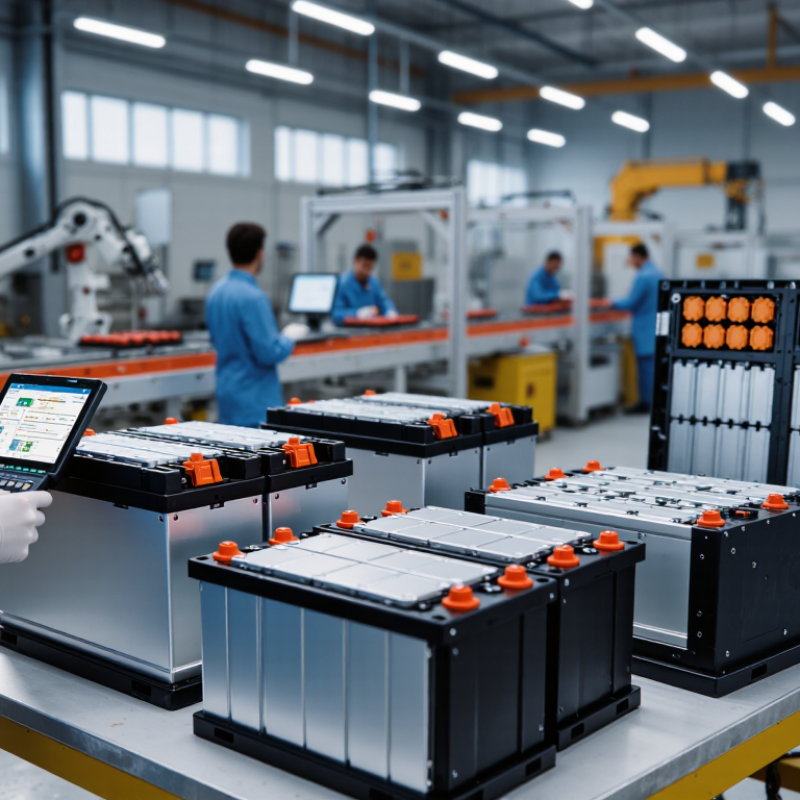
Factory audits should examine welding quality, aging rooms, safety testing, and warehouse conditions. A polished factory tour can still hide weak after-sales support. That point deserves attention.

Tips: Compare at least three technical quotations. Ask for a sample battery before bulk purchasing. Test real capacity under your expected load, rather than trusting the label alone. Review warranty exclusions carefully, especially for deep discharge and high-temperature operation. Confirm replacement-part availability and remote BMS support. The Global Battery Alliance also emphasizes traceability and responsible supply chains, so ask how material records are managed. Cheap offers may reduce upfront cost, but inconsistent cells can create higher maintenance expenses later. Even experienced buyers can overlook installation conditions. Check cable size, ventilation, enclosure rating, and daily discharge depth before selecting a supplier.