- Home
- Company
- Products
- News
- FAQs
- Blog
- Contact
Leave Your Message
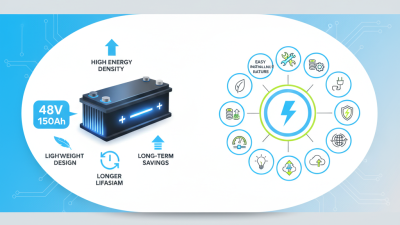
A 48V 50Ah battery can suit solar storage, backup power, marine systems, or light electric vehicles. Its nominal energy is about 2.4 kWh, based on the stated voltage and capacity. Actual usable energy depends on chemistry, battery management settings, and operating conditions. The phrase “48v 50 A Lithium” appears in buyer searches, but product listings may use inconsistent wording. Check the datasheet, not only the headline.
This guide compares common options, including lithium iron phosphate (LiFePO4) and nickel manganese cobalt (NMC) batteries. LiFePO4 models are often selected for cycle life and thermal stability; NMC packs may offer a different balance of size, weight, and energy density. Neither label tells the whole story. Details vary. Look closely at continuous discharge current, low-temperature charging limits, enclosure rating, cell configuration, and warranty terms. A metal case on a workshop shelf feels reassuring, but it does not replace verified protection ratings.
For global buyers, connector type, charger compatibility, service access, and applicable regional certifications also matter. Ask suppliers for test documents and clear operating limits, then compare them against your equipment requirements. Some specifications are easy to miss, and even a careful checklist may not catch every mismatch. Treat published claims as a starting point, confirm important details in writing, and allow for differences between nominal and working voltage.
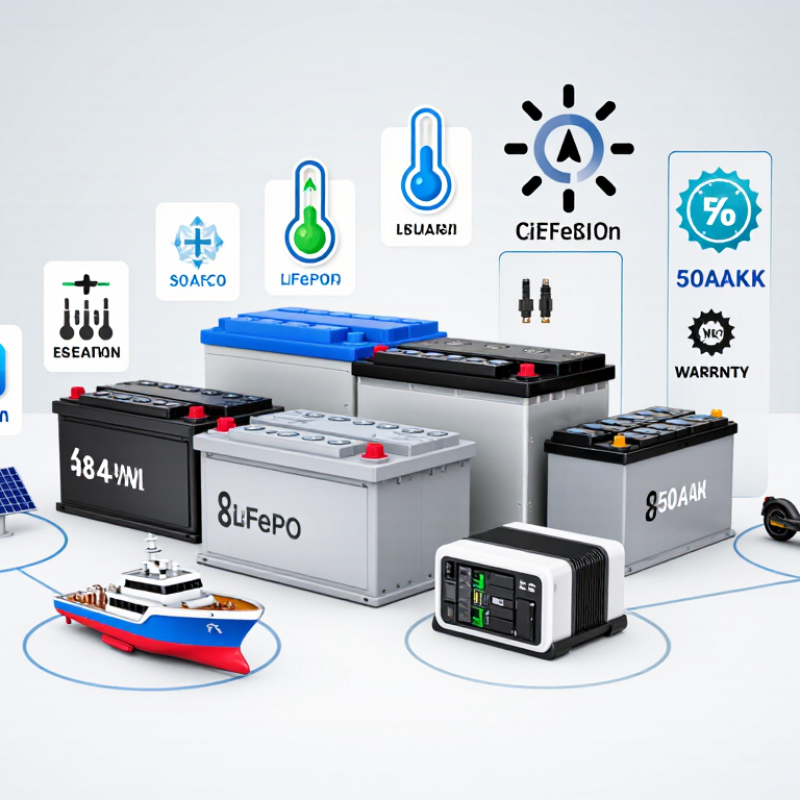
A 48V 50Ah lithium battery combines a nominal voltage of 48 volts with a capacity of 50 amp-hours. Multiply those figures to estimate stored energy: about 2,400 watt-hours, or 2.4 kilowatt-hours. This is a rating, not a guarantee of usable energy. Battery chemistry, temperature, age, and the battery management system’s cutoff can all affect what equipment receives.
Amp-hours describe charge capacity, not how much power a battery can deliver at once. In an ideal calculation, a 50Ah battery could supply 25 amps for two hours. Real operating time is often shorter. Check the continuous and peak discharge-current ratings, especially for equipment with motors that draw extra current when starting. Also confirm that the charger’s voltage and charging profile match the battery chemistry; “48V” alone is not enough to choose a charger.
Tips: Compare watt-hours, discharge limits, and charging specifications before buying. A label may look simple, but small differences matter. Not quite a promise. For a practical estimate, record your device’s average power draw and allow a margin for startup surges, cold conditions, and battery aging. Manufacturers may test under different conditions, so ask how capacity was measured.
| Lithium Battery Type | Typical Cell Configuration | Nominal Pack Voltage | Nominal Energy at 50Ah | Typical Characteristics | Buyer Checks |
|---|---|---|---|---|---|
| LiFePO₄ (LFP) | 16 cells in series (16S) | 51.2V (3.2V per cell × 16) |
2,560Wh (51.2V × 50Ah) |
Long cycle life is common for this chemistry; stable discharge voltage and good thermal stability are typical advantages. | Confirm the charger profile, BMS limits, continuous and peak current ratings, and whether the pack fits the equipment’s voltage range. |
| Lithium Nickel Manganese Cobalt Oxide (NMC) | 13 cells in series (13S) | 46.8V nominal (3.6V per cell × 13) |
2,340Wh (46.8V × 50Ah) |
Often selected when compact size or lower weight is important. Exact performance depends on the cell design and pack construction. | Check the device’s full voltage range and charger settings. A “48V” label alone does not confirm compatibility with every 48V system. |
| Lithium Titanate Oxide (LTO) | 21 cells in series (21S) is one possible design | About 48.3V nominal (2.3V per cell × 21) |
About 2,415Wh (48.3V × 50Ah) |
Can support high charge and discharge rates and many cycles in suitable designs; usually has lower energy per unit mass than some other lithium chemistries. | Verify the exact cell voltage limits, pack configuration, BMS settings, and compatible charger. LTO voltage limits differ from LFP and NMC. |
How to Read a 48V 50Ah Battery Rating
| Rating or Term | What It Means | Practical Example |
|---|---|---|
| “48V” voltage class | A product category, not a guarantee that every battery has exactly 48.0V nominal voltage. Nominal voltage depends on the chemistry and number of cells connected in series. | A 16S LFP pack is typically 51.2V nominal, while a 13S NMC pack is typically 46.8V nominal; both may be sold for 48V-class applications. |
| 50Ah capacity | A measure of electric charge capacity. The value should be considered together with the stated test conditions, including discharge current, temperature, and cutoff voltage. | At a 10A discharge rate, a 50Ah rating suggests about five hours under idealized rating conditions; real runtime varies with load and operating conditions. |
| Nominal energy (Wh) | Estimated energy calculated as nominal voltage multiplied by amp-hour capacity. It is a useful comparison figure, not a promise of usable energy in every application. | 51.2V × 50Ah = 2,560Wh nominal for a typical 16S LFP pack. |
| Charge voltage | The maximum charging voltage specified for the complete pack. It depends on cell chemistry, series count, and the battery maker’s limits. | Do not select a charger based only on the “48V” label; match its charging profile and voltage to the battery’s specifications. |
| Continuous discharge current | The current the battery is designed to supply continuously under specified conditions. It is separate from capacity in Ah. | A 50Ah battery rated for 50A continuous discharge has a nominal 1C discharge rate; confirm the rating and thermal limits in the product datasheet. |
| BMS protection | The battery management system monitors cells and may protect against conditions such as overvoltage, undervoltage, overcurrent, and excessive temperature. | Check the BMS current limits and protection behavior against the motor, inverter, or other connected equipment. |
Note: Values shown are typical examples for the stated cell configurations, not universal specifications. Actual voltage limits, usable energy, current ratings, cycle life, and operating temperature range vary by cell, battery design, BMS, and test conditions. Confirm compatibility using the specific battery and equipment datasheets.