Leave Your Message

How to Choose the Best 48V 300Ah Lithium Battery in China?

Choosing the best 48V 300Ah lithium battery in China begins with matching the battery to your equipment, not just comparing prices. A 48 Vot 300 Amp Li Battery may suit a solar storage system, forklift, or other high-demand application, but each setup has different voltage, current, and communication requirements. Confirm the battery’s nominal and charging voltages, continuous discharge rating, dimensions, and terminal layout. A label alone is not enough.

Ask suppliers for a complete datasheet and clear test conditions. Check the battery chemistry, usable capacity, cycle-life rating, and operating-temperature range. For lithium iron phosphate models, confirm that the battery management system protects against overcharging, excessive discharge, and overheating. Details matter. Request evidence for relevant safety and quality certifications, and verify that documents match the exact model being offered. Compare warranty terms, replacement procedures, technical support, and shipping arrangements—not only the headline price. If possible, ask for references or a sample test report, then verify the figures independently. One overlooked detail can delay installation. A careful comparison should also account for inverter compatibility and the space available for mounting. Supplier claims can be useful, but they are not a substitute for documentation and practical checks. There is no universally best battery; the right choice depends on real load profiles, installation conditions, and service needs. This guide explains how to assess those factors and make a more informed purchase.
How to Choose the Best 48V 300Ah Lithium Battery in China?

Define the Application and Required Battery Configuration

Before comparing 48V 300Ah lithium batteries, define the job the battery must do. A 48V, 300Ah nameplate rating represents about 14.4kWh; the usable energy depends on cell chemistry, operating limits, and the battery management system. List the loads, their running watts, startup surges, and hours of use. A refrigerator cycling overnight is different from a pump that draws a brief, high current. Measure real consumption where possible. Estimates can be wrong.

Then match the battery configuration to the inverter and daily load. Check the inverter’s DC voltage range, continuous current, surge demand, and charging profile. For example, a 3kW load at 48V draws roughly 63A before conversion losses, so confirm that the battery can safely supply it. NREL’s 2024 Annual Technology Baseline models utility-scale battery storage at 85% round-trip efficiency; this is a system-level benchmark, not a promise for a specific battery. Leave room for conversion losses and reserve capacity. If more storage is needed, verify that parallel connection is supported and that cables, protection, and charging equipment suit the combined current. A bigger bank is not automatically better. Check the actual datasheet, especially discharge limits and temperature range, before deciding.
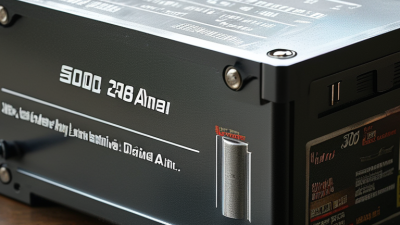
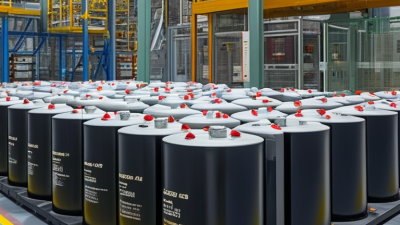
Compare Chemistry, Voltage, Capacity, and Performance Specifications

For a 48V 300Ah lithium battery, compare usable energy, not just the label. At 48V nominal, 300Ah equals about 14.4kWh; a 16-cell LiFePO4 pack is often rated at 51.2V, or 15.36kWh nominal. Confirm the actual operating-voltage range matches your inverter. Chemistry matters too: the IEA’s Global EV Outlook 2024 reported that LFP supplied nearly 40% of electric-car battery sales in 2023. That signals broad adoption, but it does not prove every LFP pack suits every installation. Check whether the quoted capacity is usable, and at what discharge rate and temperature.

Compare continuous and peak discharge current, charge limits, cycle-life test conditions, and built-in BMS protections. A 300Ah rating alone cannot tell you whether the battery can start a compressor or sustain a heavy load. Ask for test conditions behind cycle-life claims; temperature, depth of discharge, and charge rate can change the result. One specification may still be unclear, so request the full data sheet and warranty terms.

Tips: Check the data sheet. Match the battery’s voltage window to your inverter, and verify usable kWh, discharge current, and low-temperature charging limits before purchase.

Check Safety Features, Certifications, and Battery Management Systems

When evaluating a 48V 300Ah lithium battery, check the actual voltage range and usable capacity, not just the label. Some “48V” systems use different nominal voltages, which can affect inverter compatibility. Ask for the battery’s datasheet and confirm that its continuous and peak current ratings suit your equipment. Small details matter.

Inspect the safety protections and supporting documents. The battery should have safeguards against overcharge, over-discharge, overcurrent, short circuits, and excessive temperature. If charging in cold conditions is possible, check whether low-temperature charging is blocked. Request certificates or test reports for the exact battery model, then verify their scope and issuing laboratory. Not just a sticker. A certificate is useful evidence, but it does not replace checking the product’s operating limits or installation instructions.

The battery management system, or BMS, should monitor cell voltage and temperature, balance cells, and disconnect the pack when limits are exceeded. Ask for its maximum continuous current, number and placement of temperature sensors, and fault-recovery procedure. If the system offers monitoring, check whether it records useful alarms rather than only showing a percentage. A tidy specification sheet can still leave questions; request clear answers before purchase.

How to Choose the Best 48V 300Ah Lithium Battery in China? - Check Safety Features, Certifications, and Battery Management Systems

Selection Factor What to Check Useful Reference or Evidence Why It Matters
Cell chemistry and nominal voltage Confirm the chemistry and the battery’s actual nominal voltage rather than relying only on the “48V” label. A common 16-series LiFePO₄ configuration is 51.2V nominal (16 × 3.2V per cell). Other lithium chemistries and system designs may differ. The voltage profile must be compatible with the inverter, charger, and load.
Rated capacity and energy Check that the datasheet states rated capacity in amp-hours and nominal energy in watt-hours, including the test conditions. At 51.2V and 300Ah, nominal energy is 15.36kWh (51.2 × 300). At 48V and 300Ah, it is 14.4kWh. Usable energy depends on the permitted discharge range and operating conditions. A clear energy rating helps compare products and estimate runtime without confusing nominal capacity with usable energy.
BMS protection functions Verify protection against cell overvoltage and undervoltage, overcurrent, short circuit, and high or low temperature. Check whether cell balancing is included. Request the BMS specification and confirm the protection limits, alarm behavior, and recovery conditions against the battery datasheet. The BMS monitors battery operating conditions and can help prevent operation outside specified limits.
Continuous and peak current Compare the BMS’s continuous discharge and charge current ratings with the inverter, charger, and expected loads. Check peak-current limits and their permitted duration. For illustration, a 5kW load at 51.2V draws about 98A on the DC side before conversion losses (5,000 ÷ 51.2). Actual current can be higher depending on efficiency and load conditions. A battery with insufficient current capability may shut down or fail to support the intended load.
Temperature limits Check the specified charging and discharging temperature ranges, plus any low-temperature charge cutoff or heating system. Use the exact limits stated in the product datasheet; permitted ranges vary by cell design and battery configuration. Charging outside the cell maker’s allowed temperature range can damage cells and create safety risks.
Certifications and test reports Ask for current, verifiable documents that apply to the exact battery model and intended market. Check model numbers, scope, issuing body, and validity where applicable. Relevant examples include IEC 62619 for industrial lithium batteries, UL 1973 for stationary and auxiliary power batteries, and UN 38.3 test documentation for transport. Requirements depend on application and destination. A certificate or report is meaningful only when its scope and product identity match the battery being supplied.
System-level safety For an installed energy-storage system, check the safety evaluation of the complete system, including battery, inverter, controls, and installation configuration. UL 9540 is an example of a system-level energy-storage safety standard; confirm the applicable standards and local codes for the project. A battery-level document alone does not necessarily demonstrate that the complete installation has been evaluated.
Communications and compatibility Confirm supported interfaces and protocols, such as CAN or RS-485, and obtain the compatibility list or communication specifications for the inverter. Check connector pinout, baud rate, protocol version, and required settings rather than assuming that two devices are compatible because they share an interface. Reliable communication allows the inverter and BMS to exchange operating limits and battery status.
Parallel operation and installation If expanding capacity, verify whether parallel connection is allowed, the maximum number of units, cable requirements, and installation clearances. Follow the manufacturer’s wiring and protection instructions; use correctly rated cables and overcurrent protection for the installation. Incorrect parallel wiring or protection can lead to uneven current sharing and unsafe operating conditions.
Warranty and traceability Review warranty duration, cycle or energy-throughput conditions, exclusions, service process, and serial-number traceability. Request written terms and batch-level quality records. Compare cycle-life claims only when the test temperature, discharge depth, and end-of-life capacity criterion are stated. Conditions and test methods determine how meaningful capacity-retention and cycle-life claims are.

Note: Reference values are for comparison and calculation only. Confirm all voltage, current, temperature, certification, and installation requirements in the exact product documentation and applicable local regulations.

Evaluate Chinese Manufacturers, Quality Control, and After-Sales Support

Choosing a 48V 300Ah lithium battery in China starts with checking how the manufacturer works, not just comparing prices. Ask whether the factory can show production records, cell grades, and serial-number traceability for the unit you will receive. A site visit or live production call can help, but a polished factory video proves little. Request recent test reports tied to the same battery model.

Quality control should cover more than a final voltage check. Ask how the supplier verifies capacity, cell balance, insulation, and battery management system protections. Confirm the actual nominal voltage and usable energy; “48V” can describe different system configurations. For a 300Ah unit, request a capacity-test method and results at a stated temperature and discharge rate. Details matter. I would also ask how the battery performs after repeated charge cycles, since one successful test is not a full reliability record.

After-sales support is part of the purchase. Get warranty terms, response times, troubleshooting steps, and the process for replacement parts in writing. Check whether technical staff can review BMS alarms and provide clear wiring guidance. Ask who handles claims and where service is available. A quick reply before payment is encouraging, but it does not guarantee long-term support. I might still miss a detail in the fine print, so have an independent technician review the documents before ordering.

How to Choose a 48V 300Ah Lithium Battery in China

Suggested procurement evaluation weights—not market statistics. Use them to compare suppliers consistently, without relying on brand claims alone.

How to use this chart: Prioritize verifiable safety and quality records, then confirm usable capacity and performance under documented test conditions. Review factory quality-control procedures, warranty terms, spare-parts availability, and the response process for service issues. Check that certificates and test reports apply to the exact battery model being quoted.

Compare Total Cost, Warranty, and Expected Service Life

For a 48V 300Ah lithium battery, nominal energy is about 14.4kWh, but usable energy may be lower. Compare the delivered cost, not just the quoted battery price. Include freight, cables, compatible charging equipment, installation, and monitoring accessories. Ask for the continuous discharge rating and confirm it suits your inverter and daily loads. Numbers need context.

Warranty terms and expected service life deserve equal attention. Check the warranty period, retained-capacity threshold, cycle or energy-throughput limit, and exclusions for heat, deep discharge, or unsuitable charging. Small print matters. A long warranty is less useful if claims involve costly shipping or unclear documentation. Service life depends on temperature, depth of discharge, charging habits, and time spent fully charged. No cycle figure guarantees a fixed number of years. Request a written test report and clarify whether cycle ratings assume full or partial discharges.

Tips: Compare cost per usable kilowatt-hour over your expected ownership period. Keep the datasheet and warranty in writing. Ask what happens when capacity falls below the stated threshold. Even a careful spreadsheet can miss an installation detail, so verify compatibility before paying.