China’s telecom networks are expanding quickly, and every new site needs dependable backup power. The Ministry of Industry and Information Technology reported 4.25 million 5G base stations nationwide by the end of 2024. That scale puts battery reliability, maintenance, and replacement planning into sharper focus. The figures matter.
The GSMA’s The Mobile Economy 2024 estimated that 5.6 billion people used mobile services in 2023, with the number expected to reach 5.8 billion by 2030. These figures describe the broader connectivity market, not demand for batteries alone. Still, they help explain why operators need resilient power systems across dense urban sites and remote locations. A Telecom Battery must handle outages, temperature changes, frequent charging, and years of standby service.
This overview examines leading Chinese manufacturers through practical criteria: product range, operating history, quality controls, service coverage, and published technical specifications. It also considers lithium-based and lead-acid solutions, since site conditions and budgets differ. Company rankings can be imperfect; public data rarely compares every supplier under identical test conditions. Buyers should verify cycle-life claims, warranties, safety documentation, and after-sales support directly. A polished brochure is not field performance. The goal is a grounded starting point for comparing manufacturers—not a substitute for technical due diligence.

Telecom batteries store energy so network equipment can keep operating when the grid fails or power fluctuates. They are commonly installed in cabinets at cell sites, shelters, and switching facilities, where space and temperature can be challenging. During an outage, batteries supply direct current to radios, routers, and control systems while backup generators start, if available. They buy time. The required backup period depends on site design, network load, and local outage patterns.
A dependable battery system is more than a set of cells. Technicians consider usable capacity, discharge limits, charging behavior, ventilation, and monitoring when selecting and maintaining it. Lead-acid batteries are familiar and often economical, while lithium-ion options can offer greater usable energy in less space; suitability depends on operating conditions and lifecycle costs. Heat can shorten service life, so cabinet temperature and alarm records matter. A brief voltage check may reveal little about a battery’s remaining capacity. Regular testing gives operators a clearer picture, though no test removes every uncertainty. Good planning balances runtime, safety, maintenance access, and the consequences of a site going dark.
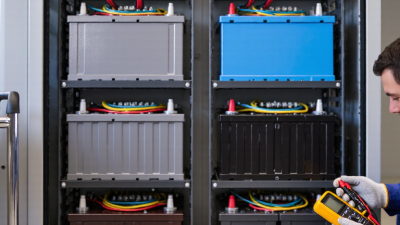
Telecom batteries provide backup power to keep network equipment operating during outages. Lead-acid, lithium iron phosphate (LFP), nickel-cadmium (NiCd), and nickel-manganese-cobalt (NMC) cells have different nominal voltages. The values shown are typical nominal voltage per cell; actual backup runtime depends on battery capacity, equipment load, temperature, battery age, and system design.
Evaluating telecom battery manufacturers in China requires more than comparing quoted capacity. Buyers should review cell chemistry, rated voltage, usable capacity, cycle-life test conditions, and performance across the site’s expected temperature range. Ask for test reports showing dates, sample sizes, and discharge rates; a cycle-life figure without these details is hard to interpret. Numbers matter. Also assess battery management protections, alarm communication, enclosure quality, and compatibility with the existing rectifier and monitoring system. Request documented checks for overcharge, overheating, and short-circuit response.
Manufacturing consistency is equally important. Review incoming-cell inspection, production traceability, final testing, and how rejected units are handled. A factory visit can clarify whether stated controls are used on the production line, though one visit is only a snapshot. Check warranty terms, spare-part availability, technical response times, and references from installations with similar backup duration and climate. Field use differs. Compare suppliers using the same technical checklist, not sales claims alone, and require deviations and exclusions in writing. Remote sites may need different priorities because service access is limited.
Tips: Ask for a sample test under your actual load profile, then confirm results independently where practical. Record ambient temperature, discharge current, and recovery time. Keep unresolved questions on the checklist; rushed procurement can miss important details.
China’s leading telecom battery manufacturers are best judged by field performance, not name recognition. The strongest suppliers typically specialize in backup systems for base stations, data centers, and remote sites. Look for documented cycle life, safe operation across temperature swings, and clear service support. Small details matter: a battery must fit the rack, connect cleanly to monitoring equipment, and keep working during a long outage.
Demand is expanding. China’s Ministry of Industry and Information Technology reported 4.25 million 5G base stations by the end of 2024 in its Communications Industry Statistical Bulletin. Its 2023 lithium-ion battery industry report recorded output above 940 GWh, though that figure covers many applications, not telecom batteries alone.
That distinction matters. Public data rarely provides a like-for-like ranking of telecom battery suppliers, so claims of a single “top” manufacturer deserve caution. Buyers should compare independently verified test results, warranty terms, and maintenance records, then check performance in the actual site environment.
A paper specification can look excellent. Real-world evidence is better.
China’s telecom battery manufacturers differ less by location than by engineering priorities. Some focus on lithium iron phosphate systems, which offer compact storage and frequent cycling. Others supply lead-acid batteries for familiar, straightforward backup setups. The right choice depends on site load, backup duration, replacement access, and operating temperature. Chemistry alone is not enough.
Application shapes the design. A rooftop radio site may need a compact cabinet that handles heat and limited space. A central data room may prioritize scalable racks, remote monitoring, and predictable maintenance. Manufacturers also vary in battery management, alarm detail, enclosure protection, and integration with power equipment. These differences matter during outages, when staff may have little time to diagnose a fault. Specifications can look similar on paper. That is not always neat.
Tips: Compare usable capacity, not just rated capacity. Ask how performance changes in hot or cold conditions, and check the recommended inspection schedule. Request test data for the intended discharge pattern. A system built for occasional backup may age poorly under daily cycling. Small details matter. Ask who handles commissioning and what happens when monitoring detects a weak cell.
| Anonymized Manufacturer Profile | Main Battery Technology | Typical Product Characteristics | Common Telecom Applications | Key Selection Considerations |
|---|---|---|---|---|
| Profile A: Lithium-focused supplier | Lithium iron phosphate (LFP) | Rechargeable chemistry with an integrated battery management system (BMS); typically offers high energy density compared with lead-acid batteries and supports frequent cycling. | Outdoor wireless base stations, sites with limited floor space, and backup systems that may cycle frequently. | Check BMS protections, system voltage compatibility, charging limits, operating-temperature specifications, and required backup duration. |
| Profile B: Lead-acid specialist | Valve-regulated lead-acid (VRLA), commonly AGM construction | Sealed, maintenance-free design in normal use; established technology with broad availability and familiar float-charging practices. | Indoor telecom rooms, traditional central-office backup, and installations where existing lead-acid systems are being maintained or replaced. | Compare usable backup capacity, float-life rating and test conditions, ventilation requirements, and replacement logistics. |
| Profile C: Deep-cycle lead-acid supplier | Gel VRLA lead-acid | Electrolyte is immobilized in a gel; product designs vary, and charging settings need to follow the battery manufacturer’s specifications. | Remote sites and backup systems designed around sealed lead-acid batteries, including locations where routine battery maintenance is difficult. | Confirm charger compatibility, permitted discharge depth, temperature limits, and the product’s specified service-life conditions. |
| Profile D: Telecom power-system integrator | LFP battery modules combined with monitoring and power-conversion equipment | Supplies a coordinated system rather than only battery cells; may include rack integration, communications interfaces, alarms, and remote monitoring. | New or upgraded base stations, distributed network sites, and installations requiring centralized battery status monitoring. | Verify integration with rectifiers and site-management systems, communications protocols, protection coordination, and service support. |
| Profile E: Multi-chemistry supplier | VRLA and LFP product families | Offers different chemistries for different site requirements; product performance and footprint depend on the specific model and configuration. | Mixed telecom estates where some sites retain lead-acid systems while others adopt lithium-based storage. | Compare total installed cost, usable energy, expected cycling, site conditions, warranty terms, and end-of-life handling. |
Note: The profiles are anonymized technology-based categories, not a company ranking or a claim about any specific manufacturer. Telecom battery specifications vary by model; confirm performance, certifications, warranty conditions, and system compatibility against the product documentation.
A telecom battery supplier should be assessed against the site, not just a price sheet. Start with the required backup time, load profile, DC voltage, and available cabinet space. Then confirm the battery chemistry and usable capacity under realistic operating conditions. A capacity figure without its test temperature, discharge rate, and cutoff voltage is hard to compare. Details matter.
Ask for test reports covering cycle life, temperature performance, and safety protections. Check whether the battery management system can communicate with your existing rectifier or monitoring platform. Request sample readings, wiring diagrams, and clear instructions for alarms and maintenance. If the equipment will face hot summers or cold winters, ask how performance changes across those temperatures. A polished brochure is not proof.
Also examine production consistency, batch traceability, warranty terms, and technical support after delivery. Ask how faults are handled, which parts can be replaced, and how quickly support responds across time zones. Where possible, inspect the factory or arrange independent sample testing before a large order. No checklist removes every risk. A small mismatch in connector layout or charging settings can disrupt installation, and buyers sometimes overlook these details. Compare suppliers using the same technical questions, then record any answer that remains vague.