Leave Your Message

How to Choose the Best Telecom Tower Battery?

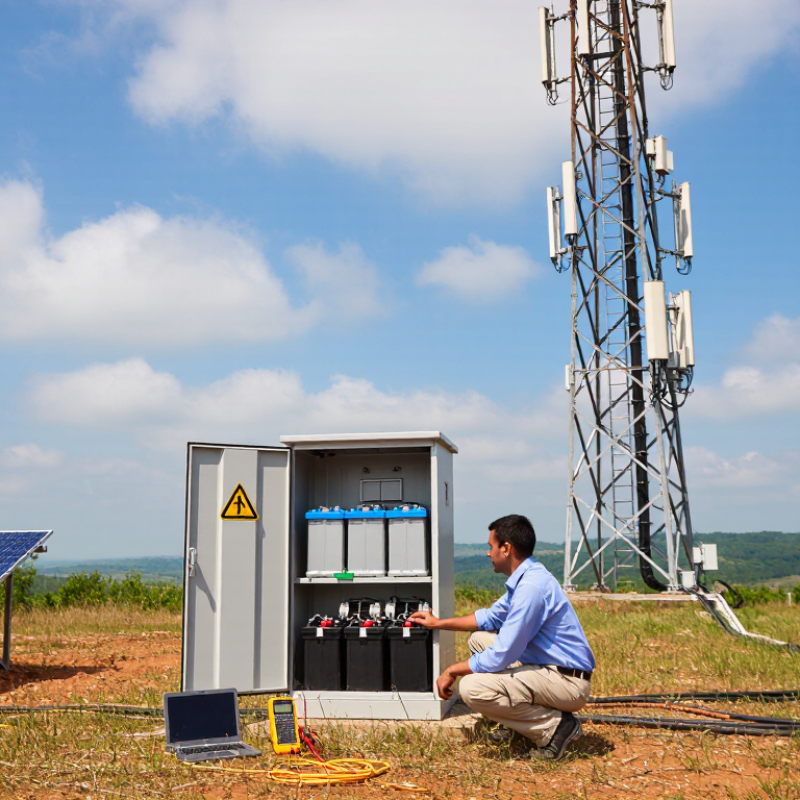
Choosing the right Telecom Tower Battery is a field decision, not just a specification exercise. A remote site may face long outages, hot cabinets, limited access, and uneven solar input. Each condition changes the battery’s useful capacity and expected service life. A neat datasheet can still miss the real operating pattern. That deserves a second look.

The International Energy Agency’s Batteries and Secure Energy Transitions report estimates that global battery storage capacity in the power sector could grow from about 85 GW in 2023 to 1,200 GW by 2030 under its net-zero pathway. This is a broad energy-storage projection, not a telecom-tower forecast, but it shows how quickly storage needs are expanding. IEA Executive Director Fatih Birol has described batteries as “a key technology for clean energy transitions.” For tower operators, the practical question is narrower: which chemistry, capacity, and monitoring approach fits the site’s load, climate, backup duration, and maintenance access?

Small details matter. Compare usable capacity, cycle life, temperature tolerance, charging limits, and battery-management features—not only the advertised amp-hours. Check whether the system can support the radio load during a real outage, with aging and conversion losses included. A lithium-based battery may reduce maintenance visits, while another design may suit existing equipment or local service conditions better. There is no universal winner. The best choice depends on measured site data, reliable supplier documentation, and a willingness to revisit assumptions after deployment.
How to Choose the Best Telecom Tower Battery?

Telecom Tower Power Requirements and Operating Conditions

Telecom tower power requirements depend on the radio load, transmission equipment, cooling, and the hours of backup required. A site with several radio units and an air conditioner can draw far more than a lightly equipped rural tower. Measure the actual DC load during busy periods; nameplate ratings alone can mislead. Short surges matter, too. In its 2024 Mobility Report, Ericsson forecast 6.3 billion 5G subscriptions by 2030, about 67% of mobile subscriptions. That growth does not predict any one tower’s demand, but it signals why capacity upgrades can change a site’s power profile.

Operating conditions shape battery choice as much as capacity does. A cabinet in direct sun may run hot, while an exposed site can face freezing nights, dust, and unstable grid supply. Heat can shorten battery service life; cold can reduce available capacity just when an outage begins. Measure cabinet temperatures, inspect ventilation, and check how often the generator starts. Then size for the measured load and required autonomy, allowing for conversion losses and end-of-life capacity. IEEE Std 485-2020 describes duty-cycle-based sizing for stationary lead-acid batteries; lithium systems need chemistry-specific limits and controls. For example, a 2 kW load for eight hours needs 16 kWh before losses or reserve. That is only a starting estimate. Real sites are messier.

Battery Chemistry and Performance Characteristics

Telecom tower batteries face repeated outages, long float periods, and hot, dust-prone enclosures. Chemistry changes how they handle that duty. The U.S. Department of Energy’s 2022 Grid Energy Storage Technology Cost and Performance Assessment reports indicative cycle-life ranges of about 500–1,500 cycles for lead-acid and 2,000–10,000 for lithium-ion, depending on design and operating conditions. It also places typical round-trip efficiency near 80% for lead-acid and around 85% for lithium-ion. These are comparison points, not guarantees for a tower installation.

Lead-acid remains familiar and can suit sites with modest cycling and tight upfront budgets. It is heavy, and frequent deep discharge can shorten service life. Lithium-ion generally offers more usable energy in less space and tolerates cycling better, but needs a compatible battery-management system and careful thermal control. Heat matters. The National Renewable Energy Laboratory’s battery-aging research shows that temperature and operating conditions affect degradation; a shaded, ventilated cabinet can therefore matter as much as chemistry. Check the tower’s actual outage duration, charging limits, and enclosure temperature before sizing capacity. One uncertainty is often overlooked: published cycle-life figures use different test conditions, so they do not predict field life exactly. DOE’s figures are useful screening data, not a site-specific warranty.

How to Choose the Best Telecom Tower Battery?

Battery Chemistry and Performance Characteristics

At 80% depth of discharge, lithium iron phosphate (LFP) batteries typically offer more cycles than valve-regulated lead-acid (VRLA) batteries. Actual cycle life varies with temperature, charging conditions, and battery design; compare specifications under the same test conditions when selecting a battery for a telecom tower.

Capacity, Backup Time, and Charging Requirements

Choosing a telecom tower battery starts with the load it must support. Add the power draw of radios, transmission equipment, cooling, and controls, then identify which systems must stay online during an outage. Use measured demand where possible; nameplate ratings alone can mislead. Estimate required energy by multiplying the critical load in kilowatts by backup hours.

For example, a 1.2 kW load running for four hours needs 4.8 kWh delivered.

The battery’s nominal capacity must be higher to account for conversion losses, usable discharge limits, aging, and cold weather. Small margins matter.

Set backup time around realistic outage patterns and site access. A remote tower may need longer coverage than a site with reliable maintenance access. Charging requirements matter just as much. Check that the charger matches the battery’s voltage, chemistry, and permitted charging current, and confirm that available grid or generator power can restore charge before the next outage.

If 5 kWh must be replaced and net charging power is 1 kW, five hours is only an ideal estimate; losses and charge taper can extend it.

One planning detail is easy to miss: a tidy spreadsheet may not reflect a hot enclosure or an aging battery. Verify runtime with a controlled load test, then review the results periodically.

Environmental, Safety, and System Compatibility

How to Choose the Best Telecom Tower Battery?

A tower battery must fit its environment, not just its capacity target. Rooftop cabinets can face direct sun, salt air, dust, and sharp temperature swings. These conditions affect service life and maintenance needs. The International Energy Agency reported that annual battery-storage additions more than doubled in 2023, reaching about 42 GW. That growth makes careful site-level design more important, not less. Ask for operating-temperature limits, cycle-life test conditions, and documented recycling options. A headline lifespan may not reflect a hot, poorly ventilated cabinet.

Safety depends on chemistry, enclosure design, and installation. Check for battery-management alarms, temperature monitoring, and clear procedures for isolating a fault. Confirm that ventilation and fire detection match the chosen chemistry and site layout. Compatibility matters just as much: verify DC voltage, charging limits, rectifier settings, backup duration, and any required communications between the battery and power system. A battery can pass a lab test and still behave poorly with an older controller. That detail is easy to miss.

Tips:

Photograph the cabinet, record peak temperatures, and compare them with the battery’s operating limits. Review alarm logs after commissioning. IEA figures describe the wider storage market, not telecom towers specifically; local measurements remain essential. A tidy datasheet is useful, but it cannot replace a site inspection.

Service Life, Maintenance, and Total Cost of Ownership

How to Choose the Best Telecom Tower Battery?
Service Life, Maintenance, and Total Cost of Ownership

A telecom tower battery should be judged by reliable service over time, not purchase price alone. Start with the site’s actual load, backup duration, and outage history. Then compare usable capacity, expected cycle life, and performance at the site’s typical temperatures. Check the manufacturer’s test conditions: a cycle-life figure means little without its depth-of-discharge and temperature assumptions. Small details matter.

Maintenance needs vary by battery type and installation. Include inspection time, terminal checks, monitoring requirements, and any ventilation or temperature controls in your operating plan. For remote towers, a simple status alert can prevent an unnecessary site visit, but it cannot replace periodic checks. Dust, loose connections, and heat can quietly shorten service life. They are easy to miss.

Total cost of ownership includes delivery, installation, monitoring, replacement labor, and downtime risk, as well as the battery itself. Compare options over the same planning period and backup requirement. A lower-priced unit may cost more if it needs earlier replacement or frequent visits. Still, service-life estimates are not guarantees; real conditions often differ from test settings. Revisit your assumptions after reviewing site records, especially where load growth or harsh weather is likely.

How to Choose the Best Telecom Tower Battery? - Service Life, Maintenance, and Total Cost of Ownership
Battery Type Typical Service Life Maintenance Requirements Operational Considerations Main TCO Drivers Best Fit
VRLA AGM lead-acid About 3–7 years in well-managed standby service at moderate temperatures. High temperatures, deep discharges, and poor charging can shorten life. Low routine maintenance; inspect connections, charging performance, temperature, and battery condition. Individual blocks may require monitoring. Widely used for standby backup. Heavy compared with lithium batteries, and usable capacity can fall during high-rate discharge or as the battery ages. Initial purchase cost, replacement frequency, cooling needs, backup runtime, and the labor and logistics involved in replacing heavy batteries. Sites prioritizing familiar technology, established service procedures, and lower initial investment.
Vented tubular lead-acid About 10–15 years under suitable operating conditions; actual life depends strongly on temperature, charging, and maintenance. Higher than sealed batteries. Requires access for electrolyte-level checks and water replenishment, plus ventilation and appropriate safety procedures. Can suit stationary applications where regular inspection is practical. Requires space and controls to manage ventilation and electrolyte handling. Battery purchase and installation, scheduled inspection and watering, ventilation, spill controls, and eventual replacement. Remote or stationary sites where long service life is valued and trained maintenance can be provided.
Lithium iron phosphate (LFP) Often designed for roughly 10–15 years, subject to cell quality, temperature, charge settings, and depth of discharge. Cycle-life ratings vary by product and test conditions. Low routine maintenance, but requires a compatible battery management system (BMS) and monitoring of alarms, temperature, and system status. Typically offers high usable capacity and lower weight than lead-acid. Confirm charger and rectifier compatibility, cold-temperature charging limits, protection settings, and service support. Higher initial cost may be offset by fewer replacements, reduced weight and footprint, and lower maintenance. Include BMS integration and any system upgrades. Sites with limited space, difficult battery access, frequent outages, or a strong preference for fewer battery replacements.
Nickel-cadmium (Ni-Cd) Often about 15–25 years in suitable stationary applications; operating conditions and maintenance practices affect actual life. Depends on the design. Vented types need inspection and electrolyte-related maintenance; follow applicable handling and disposal rules. Can tolerate demanding operating conditions, but tends to have a higher initial cost and may require more space than newer alternatives. Higher purchase cost, maintenance and monitoring, system compatibility, and regulated handling and end-of-life disposal. Sites where ruggedness and long service life are important and the higher cost and handling requirements are acceptable.
TCO comparison checklist: Compare options over the same analysis period and backup-runtime requirement. Include the battery, installation, compatible charging equipment, replacement schedule, maintenance labor, cooling or ventilation, energy losses, monitoring, downtime risk, and end-of-life handling. Service-life figures are indicative ranges, not guarantees; confirm expected life and warranty conditions with the supplier for the site’s temperature and duty cycle.