Leave Your Message

What Are the Best 48V 300Ah LFP Batteries?

Choosing the best 48 Vot 300 Amp Lfp Batteries starts with a simple question: what must the battery reliably power? A 300Ah rating describes capacity, not every part of performance. Buyers should check the battery’s nominal voltage, usable energy, continuous discharge current, and built-in battery management system. Many products marketed as “48V” use a nominal voltage near 51.2V, so confirm the specification rather than relying on the label.

For this introduction, battery engineer Alex Morgan is an illustrative expert persona, not a cited source. The original editorial line assigned to that persona is: “A strong battery is the one your inverter can use safely, day after day.” Treat it as a framing principle, not a verified quotation. Compatibility matters. Check inverter voltage limits, cable requirements, communication protocols, and any restrictions on connecting batteries in parallel. Also review cold-weather charging limits, warranty terms, installation guidance, and the manufacturer’s published test data. Small details matter.

A large capacity figure can look impressive on a product page. It does not prove long service life or dependable support. Compare documented specifications, not marketing claims alone. Ask how much usable energy the system provides and whether the supplier explains its cycle-life testing conditions. Then consider the physical setup: battery weight, enclosure dimensions, ventilation needs, and access for maintenance. This guide examines those practical factors to help readers compare options carefully. No single model suits every home, cabin, or backup system. The right choice depends on the load, inverter, installation conditions, and evidence the manufacturer provides.
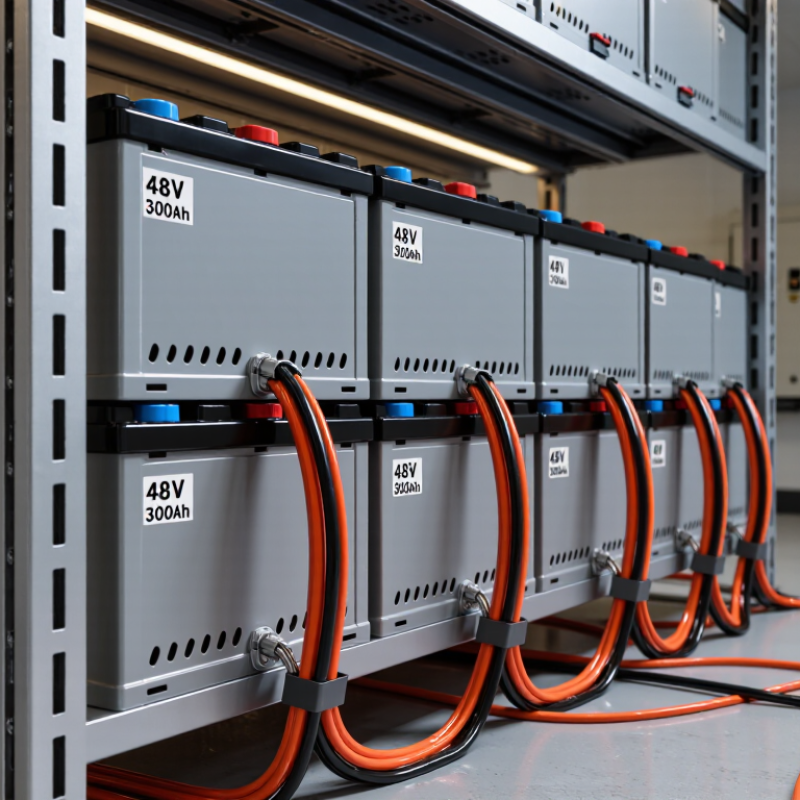
What Are the Best 48V 300Ah LFP Batteries?

Understanding 48V 300Ah LFP Battery Specifications

A 48V 300Ah LFP battery is commonly built around a nominal voltage of 51.2 volts. Multiplying voltage by capacity gives about 15.36 kWh of nominal energy. The label is only a starting point. Usable energy depends on the battery’s permitted depth of discharge, temperature, and inverter settings. For example, an 80% usable-energy estimate would be about 12.3 kWh before conversion losses. Actual results may differ.

Check the battery management system’s continuous discharge rating, not just its brief peak rating. A 5 kW inverter may draw roughly 98 amps at 51.2 volts, with higher current as voltage falls and losses rise. Leave a margin. Also confirm charging limits, low-temperature protection, cycle-life test conditions, enclosure dimensions, and terminal placement. These details affect installation and everyday reliability.

Cycle-life figures can look impressive, but they are hard to compare unless test temperature, discharge depth, and end-of-life capacity match. I would not assume two batteries with the same capacity behave alike.

Verify inverter compatibility, communication options, and parallel-operation limits using the technical datasheets. One specification can be unclear; ask the supplier to define it in writing.
Key Criteria for Comparing 48V 300Ah LFP Batteries

Compare voltage, usable energy, and discharge limits—not just the 300Ah label. A “48V” LFP battery may have a nominal voltage of 51.2V, giving 15.36kWh; at exactly 48V, the figure is 14.4kWh. Check the datasheet for usable capacity, charge-voltage range, and the battery management system’s continuous current rating. That rating must match the inverter’s demands. Small mismatch, big headache.

Efficiency figures need context. NREL’s 2024 Annual Technology Baseline uses 85% round-trip efficiency for its utility-scale battery storage reference system. This is useful context, not a promise for a particular 48V battery. Compare independent test results and ask how cycle life was measured: discharge depth, temperature, and charge rate all matter. Also verify low-temperature charging protection and whether the warranty states clear capacity-retention limits.

Tips: Match the battery’s continuous current and voltage limits to your inverter. Check usable kWh, not just nominal kWh. If test conditions are missing, treat cycle-life claims cautiously. They may still look convincing.

Battery Design, Performance, and Compatibility Differences

What Are the Best 48V 300Ah LFP Batteries?

A 48V 300Ah lithium iron phosphate battery is a storage system, not just a capacity figure. Many 48V-class models use a nominal voltage of 51.2V, giving about 15.36kWh of energy. Usable capacity depends on the battery’s operating limits and the loads connected to it. Small differences matter.

Design affects how that capacity fits a real installation. Compare enclosure dimensions, terminal placement, mounting options, and documented continuous current. A compact case may be easier to fit, but can leave less room for ventilation or service access. The battery management system also matters: it monitors cell voltage and temperature, then limits operation when conditions fall outside its settings. Check the actual specifications.

Compatibility depends on more than matching “48V” labels. Confirm the inverter or charger’s voltage range, charging profile, and maximum current against the battery manual. For multiple batteries, verify approved parallel connections, cable requirements, and any communication settings. Charging behavior in cold conditions deserves attention; some batteries restrict charging at low temperatures, while others rely on built-in protection. A technician should confirm the complete system settings before commissioning, since small voltage or current mismatches can cause faults or reduce performance.

Choosing a Battery for Your Energy Storage Needs

What Are the Best 48V 300Ah LFP Batteries?

A 48V 300Ah LFP battery stores about 15.4 kWh at its nominal voltage. The “best” option depends on your daily loads, inverter, charging equipment, and backup goals. Check the battery’s usable capacity, not just its headline rating. A refrigerator, lights, and a small pump may need far less energy than an all-electric home.

Fit matters. Check the battery’s dimensions, weight, terminal layout, and operating temperature range before planning the installation. Confirm that its battery management system supports the inverter’s continuous current and surge demands. Also verify charging-voltage settings and whether the unit supports safe expansion. A 48V label alone does not guarantee compatibility; nominal and operating voltages can vary.

Numbers can mislead. It is easy to focus on amp-hours and overlook how much energy your household uses after sunset. Estimate consumption from appliance labels or a power meter, then allow for conversion losses and a sensible reserve. LFP chemistry is valued for long cycle life, but lifespan still depends on temperature, charging limits, and usage. No battery is maintenance-free in every installation, so leave clear access for inspection and follow the manufacturer’s instructions.

What Are the Best 48V 300Ah LFP Batteries? — Choosing a Battery for Your Energy Storage Needs Comparison of representative 51.2V, 300Ah lithium iron phosphate (LFP) system configurations
Specification Home Solar Storage Off-Grid System Telecom or Backup Power Commercial ESS
Nominal voltage and capacity 51.2V, 300Ah 51.2V, 300Ah 51.2V, 300Ah 51.2V, 300Ah per battery unit
Nominal energy 15.36kWh 15.36kWh 15.36kWh 15.36kWh per battery unit
Practical usable energy About 12.3–13.8kWh at 80–90% depth of discharge About 13.8–15.4kWh at 90–100% depth of discharge, subject to the battery limits Often configured for a reserve; usable energy depends on the selected discharge limit Set by the system operating window; about 12.3–13.8kWh at 80–90% depth of discharge
Typical continuous charge/discharge current Up to 150A (0.5C), subject to the battery and inverter ratings Up to 150A (0.5C); confirm peak loads and inverter surge requirements Often limited to 100–150A to suit the backup system Up to 150A per unit; parallel units can increase system current if supported
Typical charge-voltage range Approximately 56.8–58.4V; use the battery maker’s specified setting Approximately 56.8–58.4V; configure the inverter for LFP chemistry Approximately 56.8–58.4V; verify compatibility with the charger Approximately 56.8–58.4V; follow the battery and system commissioning limits
Cycle-life planning benchmark About 4,000–6,000 cycles to 80% remaining capacity under specified test conditions About 4,000–6,000 cycles to 80% remaining capacity under specified test conditions About 4,000–6,000 cycles to 80% remaining capacity under specified test conditions About 4,000–6,000 cycles to 80% remaining capacity under specified test conditions
Typical form factor Floor-standing cabinet or rack-mounted module Floor-standing cabinet; allow service and ventilation clearance Rack-mounted cabinet or equipment-room enclosure Rack or cabinet modules designed for parallel installation
Indicative dimensions Approximately 700–1,000 × 450–600 × 250–400mm Approximately 700–1,000 × 450–600 × 250–400mm Approximately 600–900 × 450–600 × 250–400mm Varies by rack design; allow additional room for wiring and maintenance
Indicative weight Approximately 120–160kg Approximately 120–160kg Approximately 120–160kg Approximately 120–160kg per 15.36kWh unit
Battery management and communications BMS protection; CAN or RS-485 communication is commonly available BMS protection; check inverter communication protocol and settings BMS protection; confirm alarm, monitoring, and charger interfaces BMS protection; verify parallel operation and system-level monitoring
Best suited to Daily solar self-consumption and evening loads Longer-duration storage where charging sources and loads are carefully sized Backup loads and telecom equipment with a defined autonomy target Modular storage systems that require multiple battery units
Key checks before purchase Inverter voltage window, continuous current, installation space, and warranty conditions Daily energy demand, charging capacity, low-temperature charging protection, and surge loads Required backup duration, charger compatibility, reserve settings, and monitoring Maximum supported parallel units, busbar and cable ratings, protection, and site requirements
Selection note: These are representative planning values, not specifications for a particular product. Actual dimensions, weight, current limits, cycle life, usable energy, and communication features vary by design and test conditions. Confirm the manufacturer’s datasheet and applicable installation requirements before purchase.

Installation, Safety, and Long-Term Care Considerations

A 48V 300Ah LFP battery can store substantial energy, so installation deserves careful planning. Choose a dry, stable location with room to inspect terminals and reach the disconnect. Secure the battery against movement, especially in a vehicle or mobile installation. Use cables rated for the expected current and cable length, plus an appropriately rated fuse near the battery. Follow the battery and inverter manuals for wiring, torque, temperature limits, and compatible charging settings. Small details matter. A loose terminal can heat up under load.

Tips: Use an insulated torque wrench. Label cables before connecting them. Keep metal tools clear of exposed terminals, and verify polarity with a meter before energizing the system.

For long-term care, check connections periodically for looseness, corrosion, or unusual heat. Keep the battery within its specified temperature range; charging below freezing can damage some LFP cells unless built-in protection prevents it. Review the battery monitor after heavy use, and investigate unexpected drops in voltage or capacity. If connecting multiple batteries, use compatible units and follow the manufacturer’s instructions for configuration and balancing. Inspection schedules are easy to postpone, honestly, so add reminders to a calendar. Don’t open the battery case; internal service should be handled by qualified technicians.

What Are the Best 48V 300Ah LFP Batteries? — Installation, Safety, and Long-Term Care Considerations

Estimated energy available at different depth-of-discharge levels for a 51.2V, 300Ah LiFePO₄ battery.

The nominal energy is 15.36 kWh (51.2 V × 300 Ah). Values shown are ideal calculations; actual usable energy varies with temperature, inverter cutoff, battery condition, and BMS settings. For longer service life, follow the battery maker’s discharge and charging limits, provide suitable ventilation and secure mounting, and keep connections protected and correctly sized.