2026 Top 48 Volt 300Ah LFP Batteries for Global Buyers?
As energy storage expands in homes, boats, workshops, and commercial sites, 48V 300Ah LFP batteries are gaining serious attention in 2026. Their nominal capacity reaches about 15.36 kWh, offering practical energy for solar backup and off-grid equipment. However, buyers need more than an impressive capacity label. A dependable battery should combine stable lithium iron phosphate cells, a responsive battery management system, strong terminals, and a clearly stated continuous discharge rating.
This guide examines leading 48 Volt 300Ah LFP batteries for global buyers. It also includes the search term “48 Vot 300 Amp Lfp Batteries,” although the wording contains a common spelling error. Real-world selection depends on usable capacity, cycle-life testing, operating temperature, charging limits, and warranty conditions. A catalog figure is not field proof. Buyers should request test reports, installation instructions, safety certifications, and verified supplier information before placing an international order. Regional requirements may differ for shipping, grid connection, and electrical installation, so local professional advice remains important.
Look for clarity.
The strongest products usually provide low-temperature charging protection, Bluetooth or CAN communication, and replaceable service components. Physical details matter too. A well-designed enclosure should resist dust, moisture, vibration, and accidental terminal contact. Still, no battery is perfect. Performance may decline in extreme cold, poor ventilation, or repeated deep discharge. This overview compares practical strengths, limitations, value, and suitability, helping buyers make a careful decision rather than choosing only by price or marketing claims.
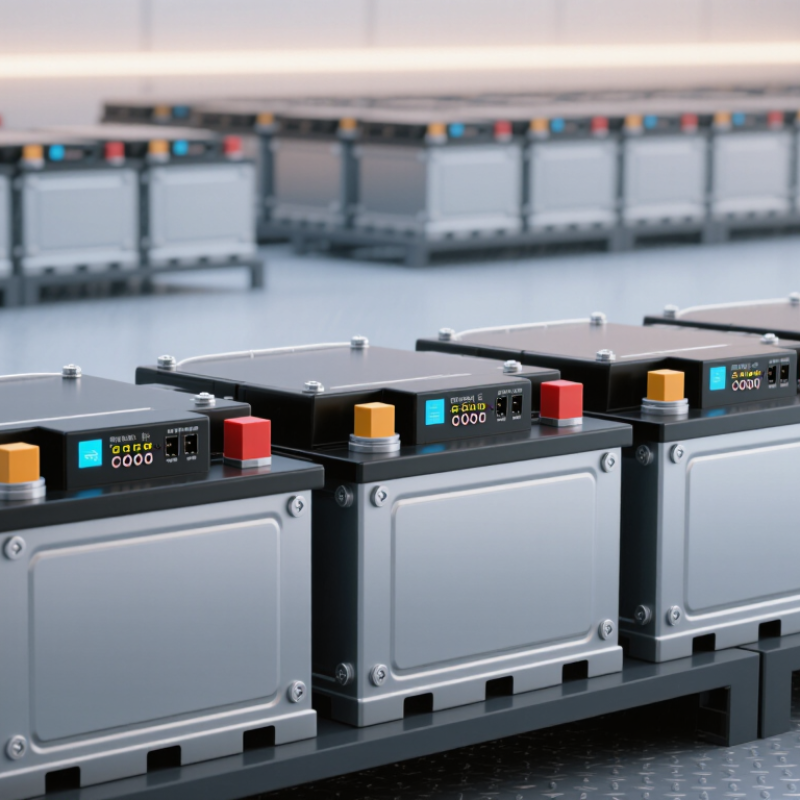
What Is a 48-Volt 300Ah LFP Battery?
A 48-volt 300Ah LFP battery is a rechargeable energy storage unit using lithium iron phosphate chemistry. LFP is valued for strong cycle life, stable performance, and improved thermal stability. The “48-volt” label needs careful reading. Many systems use 16 cells in series, giving 51.2 volts nominally. The 300Ah rating describes electrical capacity under specified testing conditions. In simple terms, 51.2V multiplied by 300Ah equals about 15.36kWh of nominal energy. Actual usable energy is lower.
From practical system checks, the battery management system matters as much as the cell chemistry. It monitors voltage, temperature, current, and balancing. It can disconnect the battery during unsafe conditions. That protection is useful, but it cannot correct poor wiring or an unsuitable charger. Check the inverter’s voltage range, charging profile, cable size, fuse rating, and communication requirements before installation. A cold garage can reduce charging performance. High heat can shorten service life. The enclosure should remain dry, clean, and accessible for inspection.
The label can mislead.
A 300Ah battery is not automatically suitable for every load. Motor starts, heaters, and off-grid inverters may demand high peak current. I would also question advertised capacity without test conditions, discharge limits, and warranty terms. LFP batteries are safer than many older lithium chemistries, but they are not risk-free. Professional installation and local electrical compliance remain essential.
2026 Top 48 Volt 300Ah LFP Batteries for Global Buyers
A 48-volt, 300Ah lithium iron phosphate (LFP) battery has a nominal energy capacity of approximately
14.4 kWh, calculated as 48V × 300Ah. Usable energy varies according to the selected depth of discharge (DoD).
The chart uses the nominal 48V and 300Ah rating. Values are calculated at different DoD levels and do not account for inverter losses, temperature effects, cable losses, aging, or battery-management-system limits. Actual commercial LFP systems may use a nominal voltage of 51.2V while still being marketed as 48V-class batteries.
How to Evaluate the Top 2026 Battery Models
For global buyers comparing 48-volt 300Ah LFP batteries in 2026, begin with usable energy, not marketing capacity. A typical 51.2V, 300Ah pack stores about 15.36kWh nominally. Real output depends on discharge limits, temperature, and reserve settings. BloombergNEF reported an average lithium-ion pack price of 115 US dollars per kWh in 2024, while stationary-storage packs averaged about 70 dollars. Price alone remains a weak buying signal.
Check the test conditions carefully. Ask for cycle-life results at a stated temperature, discharge rate, and depth of discharge. “6,000 cycles” means little without those details. Measure continuous power, peak current, round-trip efficiency, and low-temperature charging protection. The International Energy Agency reported that LFP chemistry represented over 40% of the global electric-car battery market in 2023, reflecting wider field experience and improving supply maturity.
Safety evidence deserves equal attention. Request documentation for IEC 62619, UN 38.3 transport testing, and relevant stationary-storage certifications. Confirm cell balancing, overcurrent protection, thermal monitoring, and communication compatibility with the inverter. Warranty language should define remaining capacity, operating limits, and service response times. I have found that a larger display does not prove better battery control. A clear BMS log is more useful. Sometimes, the best model is not the cheapest or the longest-rated one. It is the unit with verifiable data, replaceable components, and realistic support in the buyer’s region.
2026 Top 48 Volt 300Ah LFP Batteries for Global Buyers? - How to Evaluate the Top 2026 Battery Models
| Anonymous Reference Profile |
Nominal Voltage |
Rated Capacity |
Nominal Energy |
Cell Chemistry |
Maximum Continuous Discharge |
Recommended Charge Current |
Usable Energy at 80% DoD |
Cycle Life |
Operating Temperature |
Ingress Protection |
Communication |
Approx. Weight |
Typical Enclosure Size |
Best-Fit Application |
Profile A
High-Current Rack |
51.2 V |
300 Ah |
15.36 kWh |
LiFePO4 (LFP) |
200 A continuous |
100 A |
12.29 kWh |
≥ 6,000 cycles at 25°C, 80% DoD |
Charge: 0–45°C
Discharge: −20–55°C |
IP20 indoor rack |
CAN / RS485 |
Approx. 145–165 kg |
Approx. 700 × 500 × 300 mm |
Telecom backup, data rooms and high-load off-grid systems |
Profile B
Standard Rack |
51.2 V |
300 Ah |
15.36 kWh |
LiFePO4 (LFP) |
150 A continuous |
75 A |
12.29 kWh |
≥ 5,000 cycles at 25°C, 80% DoD |
Charge: 0–45°C
Discharge: −20–55°C |
IP20 indoor rack |
CAN / RS485 |
Approx. 135–155 kg |
Approx. 680 × 480 × 270 mm |
Residential energy storage and commercial backup |
Profile C
Outdoor Cabinet |
51.2 V |
300 Ah |
15.36 kWh |
LiFePO4 (LFP) |
150 A continuous |
75 A |
12.29 kWh |
≥ 5,000 cycles at 25°C, 80% DoD |
Charge: 0–45°C
Discharge: −20–50°C |
IP54 outdoor cabinet |
CAN / RS485 |
Approx. 180–230 kg |
Approx. 1,000 × 700 × 400 mm |
Solar-plus-storage, microgrids and outdoor installations |
Profile D
Low-Temperature Ready |
51.2 V |
300 Ah |
15.36 kWh |
LiFePO4 (LFP) |
100 A continuous |
60 A with heating control |
12.29 kWh |
≥ 4,000 cycles at 25°C, 80% DoD |
Charge: −20–45°C with heating
Discharge: −20–55°C |
IP65 outdoor enclosure |
CAN / RS485 |
Approx. 190–240 kg |
Approx. 1,050 × 750 × 450 mm |
Cold-climate cabins, remote power and mobile applications |
Profile E
Long-Life Stationary |
51.2 V |
300 Ah |
15.36 kWh |
LiFePO4 (LFP) |
100 A continuous |
60 A |
12.29 kWh |
≥ 8,000 cycles at 25°C, 70% DoD |
Charge: 0–45°C
Discharge: −20–55°C |
IP20 indoor rack |
CAN / RS485 |
Approx. 140–170 kg |
Approx. 720 × 520 × 300 mm |
Daily cycling, peak shaving and renewable-energy storage |
Profile F
Modular Parallel System |
51.2 V |
300 Ah |
15.36 kWh |
LiFePO4 (LFP) |
100 A continuous per module |
50–60 A |
12.29 kWh |
≥ 6,000 cycles at 25°C, 80% DoD |
Charge: 0–45°C
Discharge: −20–55°C |
IP21 indoor installation |
CAN / RS485; parallel support |
Approx. 135–160 kg |
Approx. 680 × 500 × 280 mm |
Expandable commercial systems and multi-module energy banks |
Evaluation note: All profiles represent anonymous 51.2 V, 300 Ah LFP reference configurations. Nominal energy is calculated as 51.2 V × 300 Ah = 15.36 kWh, while usable energy is estimated at 80% depth of discharge. Actual performance depends on cell grade, battery-management-system settings, temperature, inverter compatibility, installation conditions and test methodology. Buyers should request third-party test reports, UN 38.3 transport documentation, IEC 62619 or equivalent safety evidence, system certification, warranty terms and verified continuous-current data before purchase.
Safety, Installation, Charging, and Maintenance Requirements
A 48V 300Ah LFP battery stores about 14.4kWh nominally. The capacity is substantial. The International Energy Agency reported global battery demand reached about 750GWh in 2023, including nearly 70GWh for stationary storage. This growth makes disciplined installation increasingly important.
LFP chemistry reduces thermal risk, but it does not eliminate it. Install a battery management system, DC-rated fuse, isolator, and correctly sized cables. A 200A load can draw nearly 9.6kW at 48V. Secure the battery against movement, protect terminals from metal contact, and follow the specified tightening torque. Keep the enclosure dry and allow heat to escape. Do not place it beside heaters or fuel storage. NFPA 855 emphasizes spacing, protection, and emergency isolation for energy storage systems. Local electrical rules still control the final design.
Use the manufacturer’s charging voltage and current limits. A common 16-cell pack may charge near 58.4V, but this value is not universal. Confirm the battery model first. Avoid charging below freezing unless the system includes approved low-temperature protection. Inspect cables, fuses, terminals, and swelling monthly. Record voltage, temperature, charge cycles, and unusual alarms. Store unused batteries at the recommended state of charge. I have seen maintenance skipped after a quiet first month. That is a poor assumption. Early inspection often reveals loose terminals, damaged insulation, or inaccurate monitoring.
Global Purchasing, Compliance, Warranty, and Cost Considerations
2026 Top 48 Volt 300Ah LFP Batteries for Global Buyers
A 48-volt 300Ah LFP battery stores about 15.36 kWh at nominal voltage. Buyers should verify usable energy, not only the label. According to the International Energy Agency’s Global EV Outlook 2024, LFP chemistry approached half of the global electric-car battery market in 2023. Its lower material cost and strong thermal stability support stationary storage and commercial backup applications. Still, cold-weather charging, enclosure design, and battery-management software can change field performance.
Compliance must be checked before shipment. Request UN 38.3 transport test evidence, IEC 62619 industrial-battery testing, and region-specific electrical documentation. Ask for cell traceability, production dates, safety data, and emergency procedures. These details prevent expensive customs delays. They also reveal weak suppliers. A certificate alone is not enough. Confirm that the tested model matches the offered 48V 300Ah configuration.
Warranty language deserves careful reading. Require capacity retention, cycle limits, operating temperatures, response times, and the location of service support. A five-year warranty may exclude high-temperature use or partial cycling. That is easy to miss. BloombergNEF reported an average global lithium-ion pack price of 115 dollars per kWh in 2024, but this benchmark does not equal delivered project cost. Freight, tariffs, inverters, monitoring, installation, and replacement reserves matter. I would compare total cost per usable kWh over the planned life, not purchase price alone. The calculation remains imperfect when suppliers provide limited degradation data.