What Is a 48V 160 Amp Battery?
A 48 V 160 Amp Battery is often described as a powerful energy source, but the label can cause confusion. In many product listings, “160 Amp” actually means 160 amp-hours, written as 160Ah. That describes stored capacity, not continuous output current. A careful explanation matters.
A typical 48 V 160Ah lithium battery stores about 7.68 kilowatt-hours at its nominal voltage. Some LiFePO4 models use a 51.2 V nominal voltage, producing approximately 8.19 kilowatt-hours. The real usable amount depends on the battery management system, temperature, inverter efficiency, and recommended depth of discharge. Numbers alone do not tell the whole story.
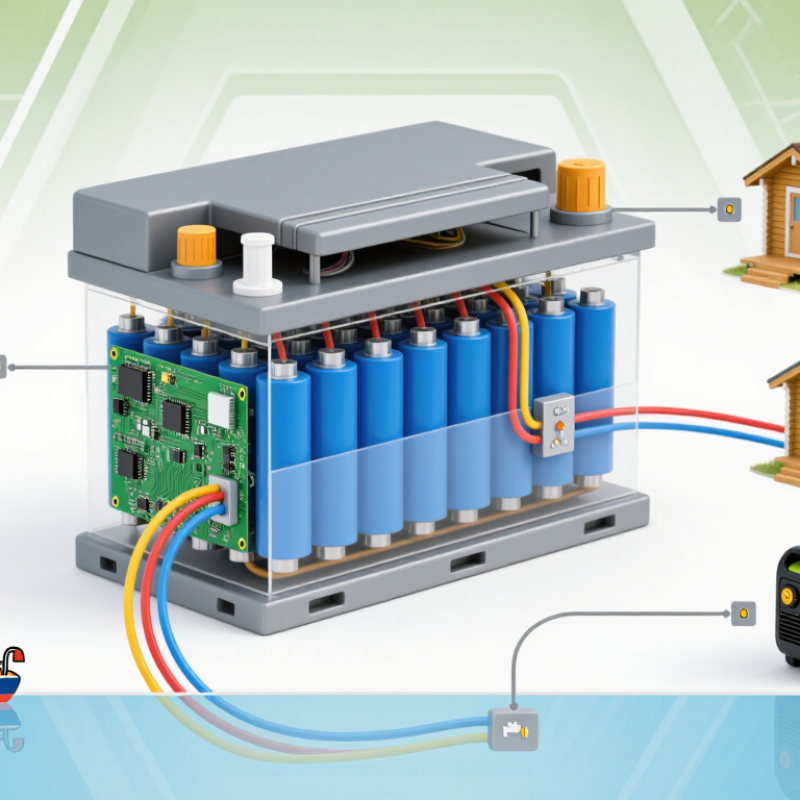
Battery scientist Dr. Jeff Dahn has said, “The lithium-ion battery is a very complicated device.” That warning applies here. Inside the case, cells, sensors, busbars, and a BMS must work together. A 160Ah battery may run a 1,000-watt load for several hours, but cable size and surge demand still matter. Poor connections create heat.
Small details matter.
In practical use, this battery can support solar storage, marine systems, backup power, or carefully matched off-grid equipment. However, not every 48 V inverter is compatible with every battery. Charging limits, communication protocols, enclosure protection, and cold-temperature rules require verification. I would not judge performance from capacity alone. That is an easy mistake. A reliable 48 V 160 Amp Battery should be evaluated through its chemistry, cycle-life testing, continuous-current rating, warranty, and documented safety controls.
48V 160A Battery Fundamentals: Voltage, Capacity, and Energy Ratings
What Is a 48V 160 Amp Battery?
48V 160A Battery Fundamentals: Voltage, Capacity, and Energy Ratings
A 48V 160A battery usually describes voltage and maximum current, not stored energy. Voltage is electrical pressure. Amperage shows how much current the battery can deliver. At 48V and 160A, the theoretical output reaches 7.68 kilowatts. That figure may be continuous or temporary. Always check the datasheet.
Energy depends on ampere-hours, written as Ah. A 48V 160Ah battery has a nominal energy rating of 7.68 kilowatt-hours. The calculation is simple: 48 × 160 = 7,680 watt-hours. Usable energy is lower. Inverter losses, temperature, battery age, and the management system reduce actual output. The label can mislead.
Battery chemistry also changes the numbers. A “48V” lithium battery may operate above 50V during charging, depending on its cell design. Users should verify charge voltage, discharge limits, and continuous current ratings. A brief 160A peak does not equal 160A continuously. That difference matters for motors, inverters, and protection devices.
The International Energy Agency reported continued growth in lithium-ion deployment in Global EV Outlook 2024. BloombergNEF’s Battery Price Survey 2024 placed average battery-pack prices near 115 dollars per kilowatt-hour. These figures describe industry trends, not one battery’s performance. In practice, cable size, connectors, ventilation, and temperature deserve equal attention. My own calculation would still require the manufacturer’s test conditions.
Calculating 7.68 kWh of Nominal Energy in a 48V 160Ah Battery
What Is a 48V 160 Amp Battery?
A 48V 160Ah battery stores approximately 7.68 kWh of nominal energy. The calculation is direct: 48 volts × 160 amp-hours = 7,680 watt-hours. Divide 7,680 by 1,000, and the result is 7.68 kilowatt-hours. In practical testing, this figure helps estimate how long the battery may operate lights, tools, or backup equipment. For example, a constant 1,000-watt load could theoretically run for 7.68 hours. That estimate is idealized.
Real performance is usually lower. Battery voltage changes during discharge, while temperature and age affect capacity. An inverter also consumes energy, often reducing the power delivered to connected equipment. If the system uses only 80% of its rated capacity, usable energy becomes about 6.14 kWh. A 2,000-watt load might then operate for roughly three hours, depending on wiring, inverter efficiency, and battery condition. The numbers are useful, but not absolute. I would avoid promising the full 7.68 kWh in everyday operation. Measuring voltage, current, temperature, and discharge time gives a more reliable picture. Small calculation errors matter.
Understanding 160A Continuous Current and 7.68 kW Output Capability
What Is a 48V 160 Amp Battery?
A 48V 160A battery can deliver 160 amps continuously, producing 7.68 kW at its nominal voltage. The calculation is simple: 48V × 160A = 7,680 watts. However, “160 amp” describes current capability, not storage capacity. Capacity should be stated in amp-hours, such as 160Ah. A 48V 160Ah battery stores roughly 7.68 kWh before efficiency, temperature, and usable-depth limits reduce the available energy.
Real output varies with voltage. A lithium battery operating between 44V and 58V could theoretically deliver about 7.04–9.28 kW at 160A. In practice, the battery management system may reduce current when cells become hot or unbalanced. Cable length matters too. At 160A, undersized wiring can create noticeable heat and voltage loss. That detail is easy to underestimate.
EPRI’s 2022 Energy Storage Cost and Performance Assessment reports typical lithium-ion system round-trip efficiency around 85–95%. After inverter and wiring losses, a 7.68 kW battery may supply closer to 6.9–7.3 kW to an AC load. The International Energy Agency reported a 14% decline in global battery-pack prices during 2023, but lower prices do not guarantee safer design or longer service life. Continuous ratings deserve verification through testing, not assumptions. A short burst may look impressive; sustained current is the harder measure.
Key Applications, Charging Parameters, Safety Standards, and Maintenance
A 48V 160 amp battery description can be confusing.
“Amp” may mean a 160-amp discharge rating, while “160Ah” means capacity. A 48V, 160Ah battery stores about 7.68kWh under ideal conditions. Actual energy changes with temperature, age, load, and battery chemistry.
Electric carts, small solar systems, backup power units, and light industrial equipment commonly use this size. Check the inverter’s continuous and peak current needs carefully.
Charging parameters must match the battery chemistry and battery management system.
A lithium battery may require a charger near 54–58.4V, but the correct value depends on its internal cell design. Lead-acid systems use different voltage stages and may need ventilation.
Never select a charger from voltage alone. Confirm charge current, temperature limits, polarity, and communication settings. A neat calculation is not the whole truth. Real capacity can be lower.
Safety needs more than a fuse.
Use an appropriate overcurrent device, a DC disconnect, insulated terminals, and correctly sized cables. Installation should follow local electrical rules and recognized standards, such as IEC 62619, UL 1973, and UN 38.3 where applicable.
These references do not replace professional inspection. Keep the battery dry, secure, and away from heat or sparks. During maintenance, inspect swelling, corrosion, loose connections, and unusual odors.
Record voltage and operating temperature. Store lithium batteries partly charged, often around 40–60% state of charge, unless the manufacturer specifies otherwise.
Mistakes happen. Regular checks reduce their cost.