Essential Tips for Choosing the Right 48 V 160 Amp Lithium Battery
In today's rapidly evolving energy landscape, the demand for efficient and reliable power storage solutions has never been more critical. Among the various options available, the 48 V 160 Amp Lithium battery stands out due to its high performance and versatility, catering to a wide range of applications from renewable energy systems to electric vehicles. According to the latest industry reports, the lithium-ion battery market is projected to grow exponentially, with a significant portion attributed to high-capacity batteries like the 48 V 160 Amp Lithium variant, which offers both durability and commendable energy density.
Choosing the right 48 V 160 Amp Lithium battery requires careful consideration of several factors, including discharge rates, cycle life, and thermal stability. Industry studies have shown that batteries in this category can provide up to 3000 charge cycles, making them an attractive option for sustainable energy storage solutions. Additionally, the ability to operate efficiently under various environmental conditions enhances their appeal to consumers and businesses alike. As the market continues to expand, understanding the key features and specifications of these batteries will empower buyers to make informed decisions that align with their energy needs and budget constraints, ultimately driving the adoption of cleaner and more efficient energy technologies.

Factors to Consider When Selecting a 48 V 160 Amp Lithium Battery
When selecting a 48 V 160 Amp lithium battery, several key factors must be carefully weighed to ensure optimal performance and durability. One critical aspect is the battery's chemistry, as differing lithium-ion types can significantly impact energy density, cycle life, and charging speed. According to a study from the National Renewable Energy Laboratory, lithium nickel manganese cobalt oxide (NMC) batteries are particularly favored for applications demanding high energy density and longevity, with a typical cycle life exceeding 2,000 cycles. This makes them a popular choice for solar storage and electric vehicles, where consistent performance is crucial.
Another vital consideration is the battery's thermal management system. Effective thermal regulation is essential for maintaining efficiency and safety, especially under high load conditions. Research indicates that lithium batteries operating within an optimal temperature range can exhibit a 20% improvement in efficiency compared to those without adequate thermal management. Additionally, prospective users should evaluate the battery's discharge rate specifications; a higher continuous discharge rate can be beneficial for applications requiring sudden bursts of power. As outlined in a report by Energy Storage Association, selecting a battery that matches the specific application requirements can drastically improve system reliability and extend the operational lifespan of the battery system.
Understanding Battery Chemistry: Lithium-ion Versus Other Types
When selecting a 48 V 160 Amp lithium battery, one must consider the chemistry behind the battery technology. Lithium-ion batteries are widely recognized for their superior energy density and efficiency compared to other types such as lead-acid and nickel-cadmium batteries. According to the International Energy Agency (IEA) in their 2022 report, lithium-ion batteries can achieve energy densities up to 250 Wh/kg, significantly higher than lead-acid batteries, which typically offer around 100 Wh/kg. This makes lithium-ion a preferred choice for applications requiring compact and lightweight solutions.
Moreover, lithium-ion batteries exhibit a lower self-discharge rate, approximately 3-5% per month, compared to 10-15% for lead-acid batteries. This characteristic increases their effectiveness in energy storage systems and electric vehicles. Additionally, the longer cycle life of lithium-ion batteries—ranging between 2000 to 5000 charge cycles—means less frequent replacements and reduced long-term costs. The U.S. Department of Energy (DOE) reported in 2023 that widespread adoption of lithium-ion technology is expected to drive costs down, with prices predicted to fall below $100 per kWh, further solidifying their position in both residential and commercial energy solutions.
These advantages highlight why lithium-ion batteries are viewed as the future of energy storage, and when choosing a 48 V 160 Amp option, understanding these distinctions can lead to more informed and beneficial choices.
Comparison of Lithium-ion Battery Types
This chart compares the energy densities of various lithium battery types, highlighting the advantages of each type. A higher energy density indicates better capacity to store energy, crucial for applications like electric vehicles and renewable energy storage.
Importance of Cycle Life and Depth of Discharge in Battery Selection
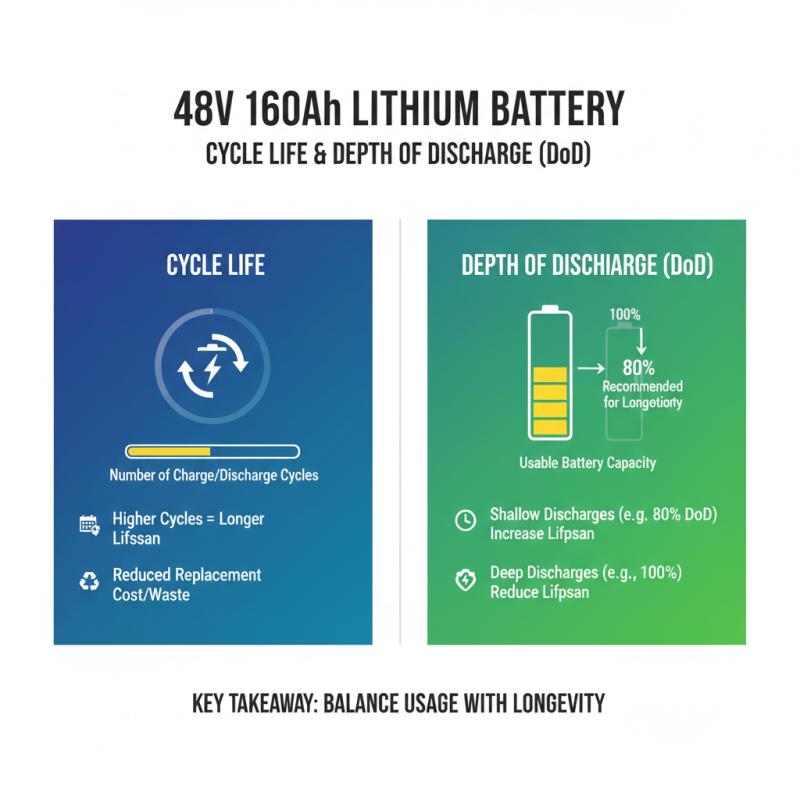
When selecting a 48 V 160 Amp lithium battery, understanding the importance of cycle life and depth of discharge (DoD) is crucial. Cycle life refers to the number of complete charge and discharge cycles a battery can undergo before its capacity falls below a specified level. A higher cycle life typically means the battery will last longer and require less frequent replacements, which can significantly reduce cost and waste over time. It's essential to consider how frequently you’ll be using the battery and what applications it’ll support.
Depth of discharge is equally important, as it indicates how much of the battery’s capacity can be utilized without causing damage. For instance, a battery with a DoD of 80% allows you to use a larger portion of its energy, whereas one with a lower DoD may limit your energy use, thereby affecting efficiency and performance. When selecting a battery, look for options that extend both cycle life and DoD to optimize your investment.
**Tips for Choosing the Right Battery:**
Consider your specific energy needs and how often you plan to recharge. A battery with a high cycle life and a suitable DoD for your usage pattern will ensure that you can maximize the battery's potential while minimizing maintenance and replacement costs. Additionally, assess environmental factors and the operating conditions, as these can impact both cycle life and DoD significantly.
Evaluating Charge Time and Energy Density for Optimal Performance
When selecting a 48 V 160 Amp lithium battery,
charge time and
energy density are critical factors that can significantly impact performance.
Charge time is primarily influenced by the battery's chemistry and design.
High-quality lithium batteries typically feature faster charging capabilities, allowing users to recharge in as little as
1 to 4 hours, compared to traditional lead-acid batteries which can take up to
8-12 hours. According to a 2022 report by the International Energy Agency,
advancements in lithium technology have made it possible to reduce charging times by 50% compared to previous generations,
enhancing operational efficiency for electric vehicles and renewable energy storage applications.
Energy density is equally crucial, as it defines how much energy a battery can store relative to its weight and volume.
A higher energy density means that the battery can deliver more power without increasing its size or weight,
which is especially vital for applications like electric mobility and energy management systems.
The latest lithium batteries can achieve energy densities exceeding 250 Wh/kg, which is a noteworthy advancement over earlier models.
A study published in the Journal of Power Sources highlighted that
lithium nickel manganese cobalt oxide (NMC) batteries exhibit superior energy density and are favored in scenarios
where space and weight constraints are a priority, enabling better overall performance and longevity.
By prioritizing these factors—charge time and energy density—users can ensure that
they choose a lithium battery that meets their specific requirements for energy efficiency and operational effectiveness.
Assessment of Thermal Management and Safety Features in Lithium Batteries
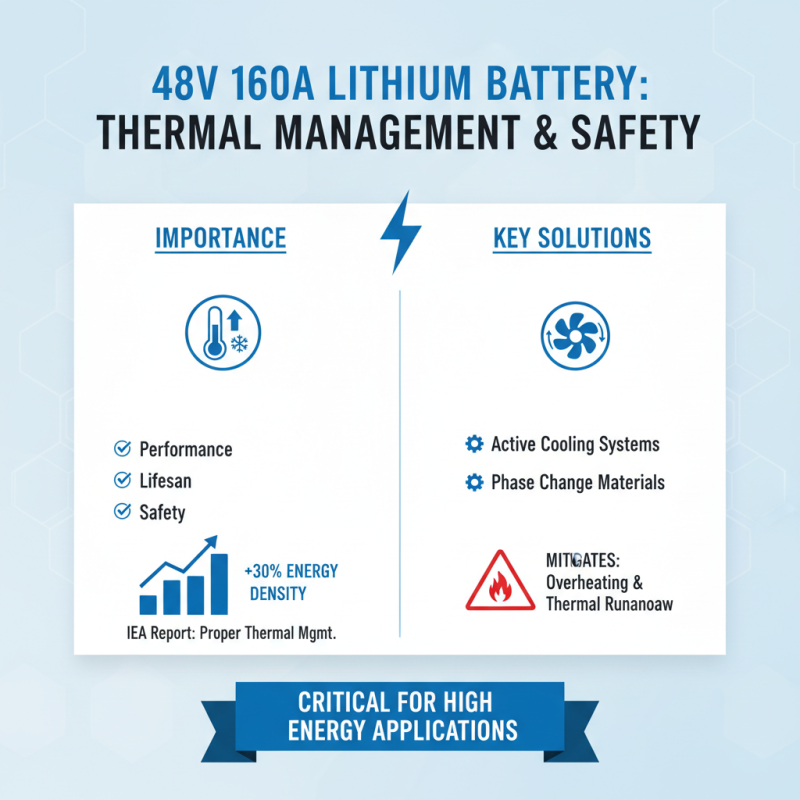
When selecting a 48 V 160 Amp lithium battery, thermal management and safety features are paramount considerations. The efficiency of thermal management can greatly influence a battery's performance, lifespan, and safety. According to a report by the International Energy Agency (IEA), proper thermal management techniques can enhance the energy density of lithium batteries by up to 30%, which is critical for applications requiring high energy output. Key thermal management solutions, such as active cooling systems or phase change materials, help regulate the battery's temperature during charge and discharge cycles, thereby mitigating the risk of overheating and subsequent thermal runaway incidents.
Safety features are equally vital when evaluating lithium batteries. Research published by the National Renewable Energy Laboratory (NREL) indicates that integrating advanced safety mechanisms, like battery management systems (BMS) that monitor voltage, current, and temperature, can reduce the incidence of failures by over 50%. Furthermore, implementing robust casing materials and safety vent designs can prevent catastrophic failures and ensure user protection. With safety as a primary concern, it's crucial to assess the battery’s ratings for short-circuit protection, overcharge protection, and internal cell fusing, which collectively enhance the overall reliability and safety of lithium battery systems.