How to Choose the Best Solar Battery for Your Needs?
Choosing the right solar battery is crucial for harnessing renewable energy effectively. A solar battery stores excess energy generated by solar panels. This stored energy can be used when the sun isn’t shining, providing reliability and independence. However, not all solar batteries are created equal.
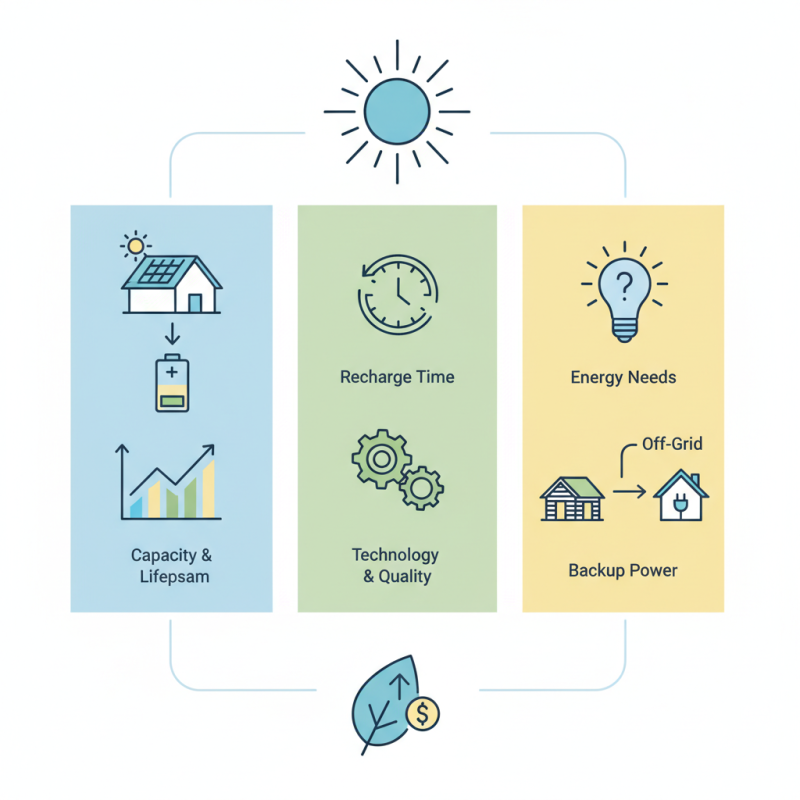
Different factors affect battery performance. Capacity, lifespan, and recharge time are vital considerations. Researching the right battery type can feel overwhelming. Brands may vary in quality and technology. Understanding your energy needs helps narrow down choices. Every household is unique; one solution may not fit all.
Reflecting on your energy usage is essential. Are you looking for backup power or a complete off-grid solution? Evaluating these aspects ensures you invest wisely. Selecting a solar battery requires careful thought and informed decisions. Finding the perfect match can lead to energy efficiency and savings.
Understanding Your Energy Needs for Solar Battery Selection
When choosing a solar battery, understanding your energy needs is crucial. Start by assessing your home’s average daily energy consumption. This is typically measured in kilowatt-hours (kWh). You can find this information from your energy bills. A clear picture of your daily usage helps in selecting the right battery capacity.
Tips: List your major appliances and their energy consumption. Include devices like refrigerators, lights, and computers. This can reveal peaks in your energy needs. Consider seasonal variations. For example, heating in winter or air conditioning in summer will significantly impact daily usage.
Evaluate how many days of backup you desire. Battery systems vary in how long they can provide power. Too small a battery won't meet your needs during outages. However, very large batteries can be costly. Reflect on your lifestyle. If you travel often or have fluctuating energy needs, adapt your choice accordingly.
Tips: Speak with professionals to compare different technologies. Each type of battery has unique advantages. Lithium-ion might be efficient, while lead-acid is often more affordable. Balancing cost, efficiency, and longevity is essential for making a sound decision. Remember, a well-informed choice leads to long-term satisfaction with solar energy solutions.
Types of Solar Batteries: An Overview of Available Options
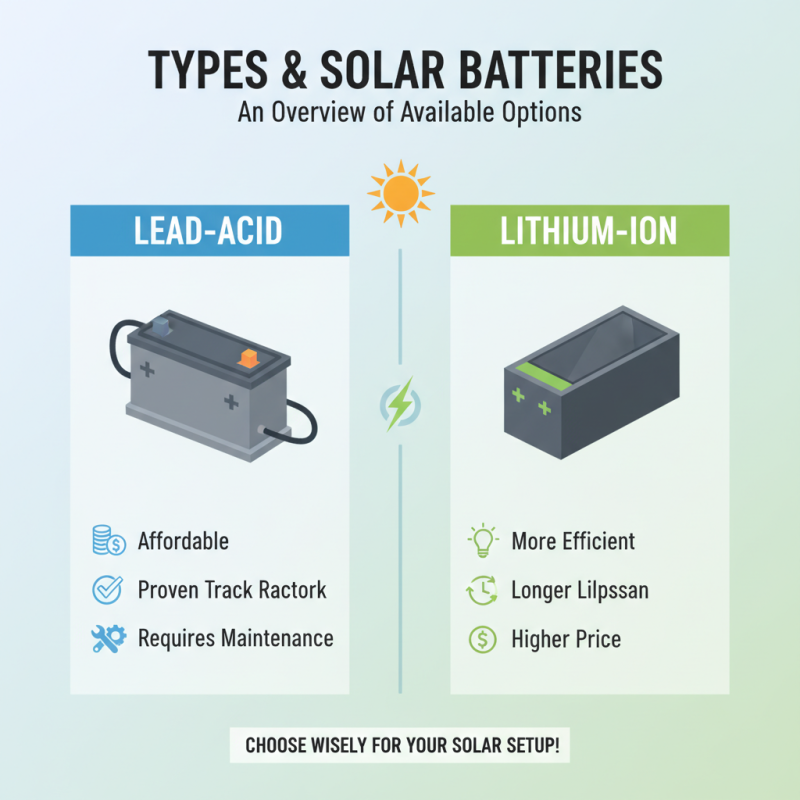
When choosing a solar battery, understanding the types available is crucial. Lead-acid batteries are popular for their affordability. They have a proven track record but require maintenance. Lithium-ion batteries, on the other hand, are more efficient and have a longer lifespan. They offer flexibility but come at a higher price.
Each battery type has advantages and disadvantages. Consider how much energy you need to store. Assess your usage patterns to find the right fit. A smaller home may benefit from lead-acid. Larger setups can take advantage of lithium-ion’s capacity.
Tips: Before making a decision, consult an energy expert. They can provide insights tailored to your needs. Always check the warranty terms; a long warranty reflects quality. Moreover, think about future energy demands. Choosing the right battery now can save you issues later.
Key Features to Consider When Choosing a Solar Battery
When selecting a solar battery, understanding key features is essential.
Capacity is the first factor to consider.
This refers to how much energy the battery can store. If your home uses a lot of power, a higher capacity is necessary.
Assess your average daily energy consumption.
Another important feature is the battery's lifespan. Look for batteries with longer cycles.
This means you can charge and discharge them more times without losing performance. Lifespan directly affects your investment.
If you choose a battery with a shorter life, you may need to replace it sooner than expected, which can be costly.
Efficiency also plays a role. Some batteries convert energy into usable power better than others.
Higher efficiency means more stored energy is available for your use. Research these specifications carefully to avoid less effective options.
It’s crucial to balance capacity, lifespan, and efficiency based on your energy needs and budget.
Reflect on your specific requirements and do thorough comparisons.
Evaluating Cost vs. Performance for Solar Batteries
Choosing the right solar battery involves a careful evaluation of cost versus performance. One key metric to consider is the battery's depth of discharge (DoD). A higher DoD allows you to use more of the battery's capacity without damage. For example, lithium-ion batteries typically have a DoD of up to 90%, compared to lead-acid batteries, which usually offer around 50%. This means that lithium-ion batteries can provide more usable energy, but they often come at a higher initial cost.
Cost is another critical factor. According to the U.S. Department of Energy, the average cost of a solar battery ranges from $400 to $750 per kWh. While initial costs can be daunting, it's important to look at lifetime performance and efficiency. Factors such as cycle life, measured in the number of charge/discharge cycles, impact long-term value. For instance, a lithium-ion battery may last 10-15 years, while a lead-acid variant could only serve 3-5 years. This disparity affects the cost-effectiveness of your investment.
Many consumers overlook ongoing maintenance costs. Some batteries require regular monitoring and upkeep, which can add to your total cost of ownership. Ensure to factor in this hidden cost when evaluating options. Balancing these elements is vital to finding a solar battery that fits both budget and energy needs, providing a sense of reliability and efficiency in your solar energy system.
Installation and Maintenance Considerations for Solar Batteries
When considering solar batteries, installation is crucial. Proper placement ensures optimal performance and longevity. Many homeowners install batteries in basements or garages. However, it’s vital to choose a location that maintains consistent temperatures. Extreme heat or cold can affect battery efficiency.
Maintenance is another key factor. Regular checks on connections and battery health help prevent issues. Dust or corrosion can hinder performance. Cleaning terminals occasionally is recommended. Furthermore, monitor battery levels and perform software updates if applicable. Many people neglect these steps, leading to decreased efficiency over time. Reviewing user manuals and following guidelines is often overlooked but essential.
Lastly, being realistic about energy needs is important. Some users overestimate required capacity, leading to excess spending. Assessing electricity usage accurately will help in selecting the right battery size. Adapting choices based on real data can lead to more successful outcomes. Each household’s requirements are unique, and careful planning can prevent common pitfalls.
How to Choose the Best Solar Battery for Your Needs? - Installation and Maintenance Considerations for Solar Batteries
| Battery Type |
Capacity (kWh) |
Cycle Life (Cycles) |
Depth of Discharge (%) |
Warranty (Years) |
Efficiency (%) |
| Lithium-ion |
10 |
3000 |
80 |
10 |
95 |
| Lead-acid |
12 |
1500 |
50 |
5 |
85 |
| Gel |
8 |
1200 |
60 |
7 |
90 |
| AGM |
12 |
1000 |
40 |
4 |
80 |