How to Choose 48 Volt 300 Amp LFP Batteries for Your Needs?
When selecting 48 Volt 300 Amp LFP batteries, understanding your specific needs is crucial. These batteries are gaining popularity for their efficiency and longevity. The right choice can impact performance and cost-effectiveness.
Consider your energy requirements first. Different applications demand varying capacities. It can be a daunting task to calculate how much power you genuinely need. Don't overlook the specifics of your system. You may focus on high performance, yet fail to assess compatibility with existing equipment.
There are many brands and models available. Each offers unique features that cater to distinct applications. Research the top options, but beware of marketing jargon. Some products may promise great performance, yet lack reliability. Seeking reviews and expert opinions can guide you toward reliable options in the 48 Volt 300 Amp LFP batteries market.
Understanding the Basics of 48 Volt 300 Amp LFP Batteries
When considering 48 Volt 300 Amp LFP (Lithium Iron Phosphate) batteries, it's crucial to understand their fundamental features. These batteries are known for their high energy density and longevity. According to industry studies, LFP batteries can last up to 5,000 cycles. This endurance makes them suitable for applications ranging from renewable energy storage to electric vehicles. Their thermal stability is another key factor; they are less likely to catch fire compared to other lithium technologies.
Choosing the right LFP battery requires assessing your specific energy needs. A 48 Volt 300 Amp battery provides 14.4 kWh of energy, enough for various setups. However, mismatches often occur. Some users overestimate their requirements, resulting in underperformance or unnecessary expenses. Battery management systems are integral to maximizing lifespan and efficiency, yet many overlook this aspect. Understanding these elements will guide your selection process.
Safety and environmental impact are also vital in your decision. LFP batteries contain no toxic heavy metals, making them a greener option. However, recycling infrastructure is still developing, causing concern about battery waste. Evaluating your priorities and researching the lifecycle of these batteries will lead to a more informed choice.
Comparative Analysis of Power Capacity in 48 Volt 300 Amp LFP Batteries
Evaluating Your Power Needs: Calculating Consumption and Load Requirements
When evaluating your power needs, understanding consumption and load requirements is crucial. Begin by identifying all the devices you intend to power. This includes lights, appliances, and any specialized equipment. Each device has a specific wattage. For accurate assessment, consider how long each will run daily. This calculation reveals your total daily energy requirement.
Once you have this data, you can determine the amp-hour capacity you'll need from your battery. For instance, if your daily usage is 4800 watts and you operate at 48 volts, your current draw will be roughly 100 amps. However, fluctuations and inefficiencies can impact your calculations. It’s important not to overlook peak usage times, where demand may increase temporarily.
When selecting a battery, ensure it has a bit more capacity than your calculations suggest. Batteries experience wear over time, and their performance can diminish. A buffer in capacity helps accommodate this. Analyzing load requirements isn't just about numbers; it’s about understanding your dependency on these power sources. Make careful decisions, and reflect on whether your initial estimates align with actual needs.
Key Specifications: Capacity, Cycle Life, and Discharge Rates Explained
When selecting 48 Volt 300 Amp LFP (Lithium Iron Phosphate) batteries, understanding key specifications is crucial. Capacity is among the primary factors. It indicates how much energy the battery can store. Typically, a higher capacity means more extended usage without needing a recharge. You should carefully assess how much energy you expect to consume. This will help ensure the battery meets your daily requirements.
Cycle life is another vital specification. It shows how many charge and discharge cycles a battery can endure before its capacity drops significantly. A higher cycle life translates to longevity and lower replacement frequency. Make sure to investigate the manufacturer’s data on cycle life to avoid premature battery failure.
Discharge rates also deserve attention. This rate indicates how quickly a battery can deliver its energy. If your application demands high power quickly, select a battery with high discharge capabilities. Remember, a battery that seems perfect on paper might not perform as expected under real conditions. Monitor your usage patterns and adjust your choices accordingly for optimal performance.
Safety Considerations: Thermal Management and Battery Protection Systems
When selecting 48 Volt 300 Amp LFP batteries, thermal management and battery protection systems are crucial for safety and performance. Lithium iron phosphate (LFP) batteries can operate safely at higher temperatures than other lithium variants. However, overheating can still pose risks. According to industry reports, temperatures exceeding 60°C can lead to thermal runaway. Implementing adequate thermal management can mitigate these risks effectively.
Consider integrating active cooling systems, such as fans or liquid cooling methods. These systems help maintain optimal battery temperatures, especially during high-demand situations. Passive cooling techniques, like using heat sinks, are also beneficial. Ensure that the battery housing allows for adequate airflow to prevent heat accumulation.
Regularly monitor battery health with built-in Battery Management Systems (BMS). BMS features like over-voltage and under-voltage protection are essential. A reliable BMS can prevent performance degradation and extend the battery lifespan. Industry data suggests that a well-managed battery can retain up to 80% of its capacity after 5 years of use.
Mistakes can happen. It's vital to review your battery's specifications and application to ensure compatibility. Assessing factors like load requirements and ambient temperature will enhance safety and efficiency.
Comparative Analysis: LFP Batteries vs. Other Battery Technologies
When evaluating battery types for renewable energy systems, LFP (Lithium Iron Phosphate) batteries stand out. Their thermal stability and safety make them a reliable choice. Compared to lead-acid batteries, LFP batteries offer longer lifespan and deeper discharge capabilities. This can lead to significant savings in maintenance and replacement costs over time.
The performance of LFP batteries is comparable to other lithium-ion technologies. They have a lower energy density than NMC (Nickel Manganese Cobalt) batteries, but the trade-off is safety and longevity. Users seeking reliable power storage can benefit from this comparison. It’s essential to consider application needs when choosing between these technologies.
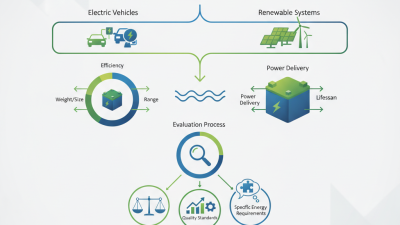
Evaluate your specific energy requirements. Do you prioritize weight, size, or discharge rates? These factors influence your battery choice. Regularly assess your system's performance, seeking better optimization. Pay attention to environmental conditions. Extreme temperatures can affect battery efficiency. Adjust your setup accordingly for best results.