Top 10 Benefits of 48 V 160 Amp Lithium Batteries for Buyers?
The rise of sustainable energy solutions has brought significant advancements in battery technology. Among these, the 48 V 160 Amp Lithium batteries stand out for their capability and efficiency. These batteries deliver impressive power and longevity, making them ideal for both residential and commercial applications.
Buyers are increasingly realizing the advantages of adopting 48 V 160 Amp Lithium batteries. With a remarkable energy density, they reduce the overall size and weight of energy storage systems. This not only saves space but also cuts down on installation and maintenance costs. Additionally, they offer exceptional discharge rates, enhancing performance during peak demands.
However, potential buyers should consider their specific needs. While these batteries can provide high efficiency, their initial investment may raise concerns. Evaluating the long-term benefits against upfront costs is essential. Ultimately, understanding the complete advantages of 48 V 160 Amp Lithium batteries equips buyers to make informed decisions in a rapidly evolving energy landscape.

Key Features of 48 V 160 Amp Lithium Batteries
48 V 160 Amp lithium batteries offer several key features that stand out in the energy market. Their high energy density allows for extended usage periods, making them ideal for various applications. These batteries are lightweight compared to traditional lead-acid options, facilitating easier transport and installation. A robust cooling system enhances their performance, ensuring they remain efficient even in demanding conditions.
Another notable feature is the built-in battery management system (BMS). This system monitors voltage, temperature, and charge cycles, thus optimizing battery life. Users often appreciate the longer lifespan, which can reach several thousand cycles. Enhanced safety features reduce risks associated with overheating or short circuits. However, potential buyers should consider installation complexities, which may require professional assistance.
Additionally, fast charging capabilities save valuable time for users. Most can recharge within a couple of hours, making them convenient for daily use. While the initial investment might be higher than traditional batteries, long-term savings and performance make them worthwhile. Evaluating both pros and cons ensures informed decisions for anyone looking to invest in energy storage solutions.
Advantages of Using Lithium Batteries Over Traditional Options
Lithium batteries are gaining popularity due to their numerous advantages over traditional lead-acid options. One primary benefit is their higher energy density. According to a report by the Department of Energy, lithium batteries can store up to three times more energy than lead-acid batteries of the same size. This means lighter and more compact setups, which is essential for applications like electric vehicles and renewable energy systems.
Additionally, the lifespan of lithium batteries is a significant factor. They can last up to 10 years or more with proper care. In contrast, lead-acid batteries typically last around 3-5 years. A study published in the Journal of Power Sources indicates that lithium batteries can withstand over 3,000 charge cycles, whereas lead-acid batteries only handle about 500. This longevity not only reduces landfill waste but also lowers replacement costs over time.
However, the initial investment in lithium technology can be higher. Some buyers may hesitate due to upfront costs. It's essential for potential users to weigh these costs against long-term savings and the performance benefits. A thorough cost-benefit analysis can provide insights into this growing field. Ultimately, the transition to lithium is not just about immediate savings; it's also about efficiency and sustainability in the long run.
Top 10 Benefits of 48 V 160 Amp Lithium Batteries
Cost Efficiency and Long-Term Savings for Buyers
When considering power solutions, 48 V 160 Amp lithium batteries stand out for their cost efficiency and long-term savings. Buyers often seek reliable energy sources that won’t drain their budgets. In this context, lithium batteries provide robust performance with less energy loss compared to traditional options. Less maintenance means fewer replacement costs over time.
Investing in these batteries leads to significant savings. They have a longer lifespan, often exceeding 10 years, which reduces the frequency of replacements. This longevity translates to less hassle and more budget-friendly energy management. Buyers can feel confident knowing they are making a sustainable choice that pays off in the long run.
Tip: Regularly check the health of your batteries. This practice can extend their life and efficiency. You might notice some variability in performance, especially in extreme temperatures. Understanding these nuances can help in budgeting for replacements when needed. Always focus on usage patterns for better financial and energy management.
Environmental Benefits of 48 V 160 Amp Lithium Batteries
The environmental benefits of 48 V 160 Amp lithium batteries are significant and far-reaching.
These batteries are known for their high efficiency and lower carbon footprint compared to traditional lead-acid batteries.
Reports indicate that lithium batteries can reduce greenhouse gas emissions by up to 50% over their lifespan.
This is an important consideration as industries aim to decrease their environmental impact.
Lithium batteries also have a longer life cycle. Studies show that they can last up to 10 years or more,
comparing favorably against the typical 3-5 years for lead-acid batteries. Longer lifespan means less waste and fewer batteries ending up in landfills.
The materials used in lithium batteries are also often recyclable, further enhancing their eco-friendliness.
Tip: When choosing a battery, look for options that offer recyclability. This ensures less environmental damage and promotes sustainability.
Another notable feature of lithium batteries is their energy density.
They can store more energy in a smaller space. This characteristic leads to more compact energy solutions, which is crucial for managing space effectively.
However, it's important to consider the initial costs. While more expensive upfront, the long-term savings and environmental advantages often make them a wise investment.
Tip: Calculate the total cost of ownership over the battery's life, not just the purchase price. This perspective can help in making more informed decisions.
Safety and Reliability Advantages in Energy Storage Solutions
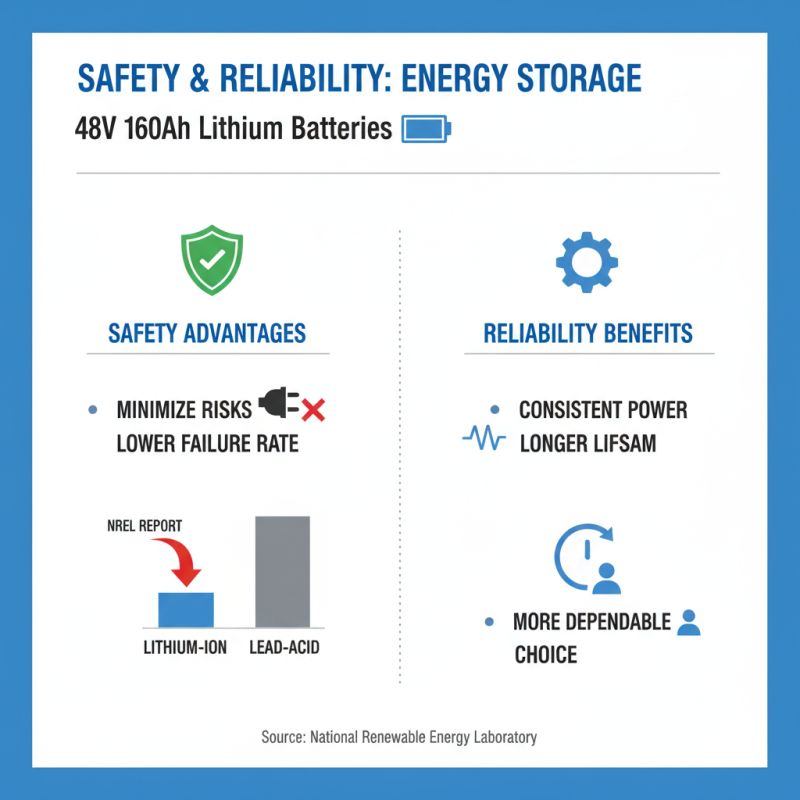
Safety and reliability are crucial when considering energy storage solutions like 48V 160 Amp lithium batteries. These batteries are designed to minimize risks associated with power failures. A report from the National Renewable Energy Laboratory indicates that lithium-ion batteries have a lower failure rate compared to traditional lead-acid batteries, making them a safer choice for consumers.
With a lifespan that can exceed 5,000 cycles, these lithium batteries demonstrate impressive longevity. This longevity significantly reduces the need for frequent replacements, leading to cost savings. However, it is essential to recognize that any battery system requires careful management to ensure safety. Overcharging or improper installations can pose risks despite their robust designs.
Lithium batteries also feature advanced thermal management systems. These systems help maintain optimal operating temperatures, further enhancing safety. Additionally, leading industry research shows that 48V configurations provide a balance between efficient performance and manageable voltage levels. Buyers should weigh these safety advantages against potential drawbacks. Regular maintenance and monitoring can mitigate risks, ensuring a reliable and safe energy storage solution.